Why nipple and spoke prep is essential
The expected results of the spoke and nipple preparation phase in wheel building are multifaceted yet crucial for the overall performance and durability of the wheel. Here are some key outcomes:
Optimal wheel strength: Properly prepped spokes and nipples ensure the wheel can withstand the stresses and strains encountered during regular use, such as impacts from road irregularities or off-road terrain.
Enhanced wheel durability: By preparing spokes and nipples correctly, you minimize the risk of premature failures such as broken spokes or nipples coming loose, thus extending the wheel’s lifespan.
Improved wheel performance: Well-prepared spokes and nipples contribute to a smoother and more responsive ride, as they help maintain consistent tension across the wheel, reducing the likelihood of wobbling or out-of-true conditions.
Reduced maintenance needs: When spokes and nipples are prepped correctly, the wheel requires less frequent truing and maintenance, saving time and effort in the long run.
Increased safety: A properly built wheel with well-prepped spokes and nipples is safer to ride, as it reduces the likelihood of sudden failures or accidents due to wheel issues.
Overall, the spoke and nipple prep phase should first facilitate smooth wheel assembly by reducing thread friction when tensioning spokes, provide better protection and longevity of components while ensuring easier maintenance throughout the wheel's lifespan.
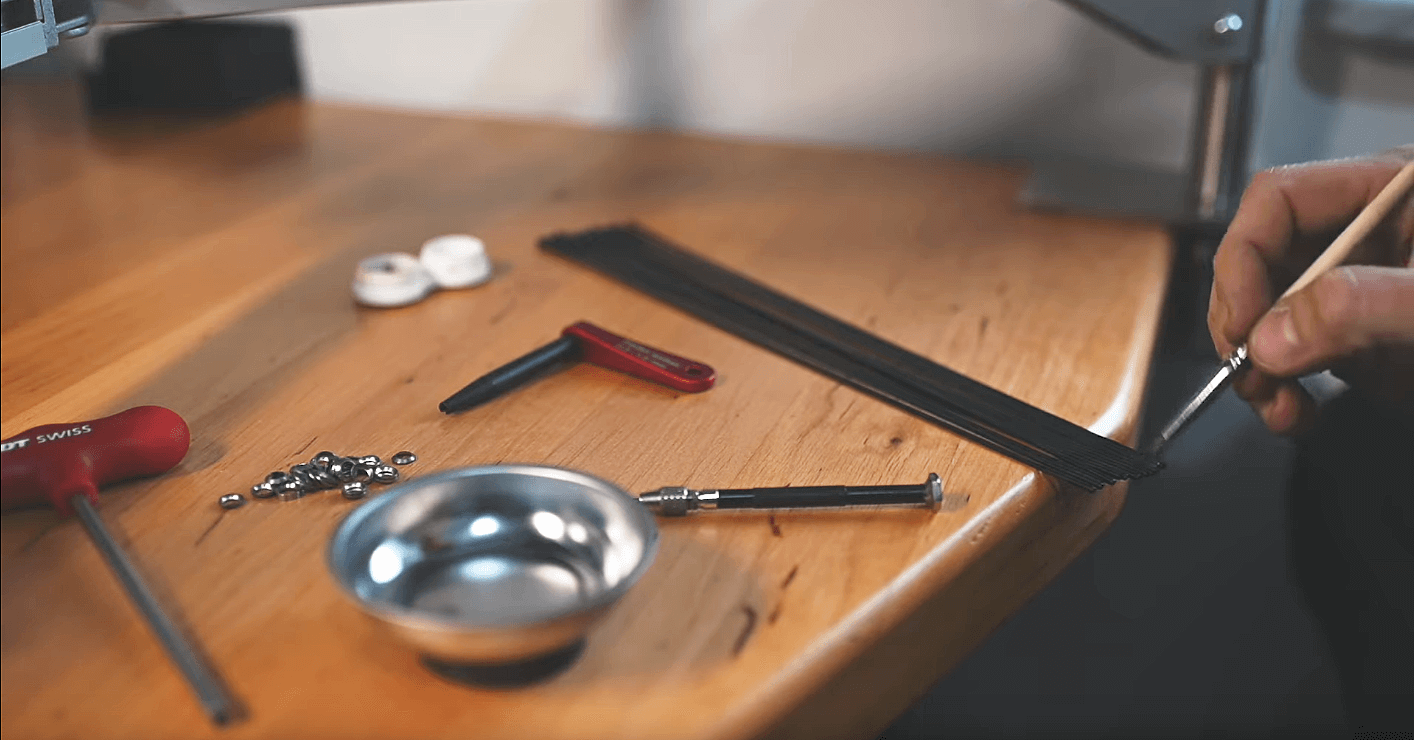
Therefore, a zero thread treatment or a “full dry” approach is not a smart choice. Keep in mind with such an approach that nipple friction rises exponentially when applying tension onto spokes which might trick you into thinking you have more tension on your spokes than actually or you can even damage fragile aluminum nipples by using an excessive force during tensioning.
With the "Why" aspect of the spoke and nipple treatment explained, how to approach the prep and which tips can you acquire from the wheel building pros?
Spoke prep solutions
Having talked to multiple seasoned wheel builders, each prefers a particular spoke thread treatment, ranging from minimalistic points of view with almost zero treatment to using component-based selective techniques or almost luxurious compounds.
To better understand the expected outcome of different approaches, especially with regards to the cons of not taking any treatment at all, take a look first at Wheel Fanatyk’s comparison of popular solutions and consideration below.

As you may see there are quite some solutions to pick from each having pros and cons. Note that application methods across these approaches vary and can have their challenges. Some threading solutions require specific techniques of application, which may add extra time if not mastered, while some solutions need to be pre-applied with a specified cure time before proceeding to wheel lacing.
Applying it by brushing a solution onto spokes or just dipping thread ends altogether? It is more like a preference thing, pick a treatment style that suits you, lets you be economical with your solution and not cause excessive mess around the place.
So without further due, here are some insights from expert wheel builders.
Tips and tricks from the pro wheel builders
Brombaer Wheels, Germany“I am following the WheelFanatyk’s procedure using his FIX spoke prep and also his nipple oil. For service (just finished a complete re-build of internal corroded alu nipples to brass ones) and just used his oil. Worked great. I know someone who thinks great about using Rolhoff's internal gear hub as the only nipple/spoke treatment agent.”

“Here are my tips: I use linseed oil for assembly to take care of the spoke threads, facilitate assembly, avoid corrosion, and have a slight blockage of nipples, in addition to being economical. This method has been used for many years by old wheel fitters. To take care of the nipples, you can also use oil or waxes that will protect the aluminum nipples from possible corrosion. It also helps during assembly to gently raise the tensions.”
Fabrice Veire aka Docfab21, France“I rely on Park tool ASC-1 anti-seize compound as it reduces reduction of friction nicely, protects very well from corrosion, and lasts long, however, keep in mind you will need a little brush to apply it on threads. With regards to lubrication, I use Boeshield T9 as my preferred building oil, applying it on the tops of the nipples and I let the drop go inside the rim hole. Now also testing WheelFanatyk’s FIX prep liquid. Again, note you have to let it dry for about 24 hours, so it could be a problem if you don’t have time. However, it fixes nipples cool and smooth, it certainly prevents them from loosening, without any need of using glue like spoke freeze.”

“Dry preassembly for me, and then linseed oil on the remaining thread and as well as around the nipple. Afterward, use centrifugal force to drive the oil inside the nipples and around the nipple seats.”
Munro Wheels, GermanyTake a further look into these wheel builder's Instagram pages. You might learn a thing or two.
How I prep spoke and nipples
Although I had previously worked with linseed oil and found it useful, I later switched to a soft thread-locking solution from Loctite, specifically the 222 series compound. But fear not; with a breakaway torque of just 6 cNm, I would categorize it as a low-strength solution, designed primarily for fine threads. As such, its intention is primarily anti-vibration, nothing more. And its low viscosity also makes it very user-friendly for application either before or after assembly.
Regarding its application, I prefer brushing the liquid onto each spoke, however not using much. This thread-locker does not require any cure time before assembly; however, it is important to note that it will start to cure in anaerobic conditions, so the curing process basically begins after the lacing of the wheel.

Therefore, for a perfect application, you have a limited time before it is fully dried. That is why I usually start and end the wheel in one go, using this coating to treat spoke threads. Once the wheel is done, I recommend letting it sit for at least half a day before putting it to use.
Besides that, I use low-viscosity oil for lubricating nipple heads to reduce the friction of the nipple bed section inside the rim. This method has worked well for me, allowing also easy maintenance of my wheels later in their lifespan.
Time-proven method - Linseed oil
An article on spoke and nipple prep without mentioning a linseed oil would be incomplete as for many wheel builders, it is pretty much indispensable. Using linseed oil in wheel building is a time-tested method to secure spoke nipples and being as accessible as it is, no wonder why it is so popular.
As it happens, linseed oil provides a natural locking mechanism once it dries, helping to keep the spokes tensioned properly and preventing the nipples from loosening. During the assembly, it acts as a lubricant, making it easier to thread the nipples onto the spokes without stripping the threads. Serving as a medium between the spoke and nipple, it later also provides a corrosion protection of the spoke threads.

Its application is rather straightforward. Most wheel builders simply dip the threads of the batch of spokes into linseed oil before threading the nipple onto the spoke. You don't need much, just enough to coat the threads and avoid excessive mess. After assembly, it takes some time to cure and to form a bond between the spoke and nipple.
At this point, it is worth mentioning that for wheel building it is actually a boiled linseed oil that is preferred as it dries faster than raw linseed although the latter can still be effectively used for the purpose.
Where stand Pro Lock nipples
But then you ask, what about nipples with self-locking mechanism, such as Pro Lock or Secure lock nipples? To further extend on this topic, looking at more luxurious patented nipple-locking mechanisms that manufacturers are deploying, naturally raises the question of whether there is still a need for a traditional spoke & nipple treatment.
Let's take DT Swiss Pro Lock nipples for example. Following advice on their website, the use of grease or oil is actually not even recommended. The latter could be explained most likely by adding friction-reducing PTFE powder to their patented thread-locking coating mixture. Moreover, bold claims from DT Swiss can be found, implying that by using their DT Pro Lock spoke nipples, wheel durability improves up to 20 times compared to non-DT Pro Lock builds.
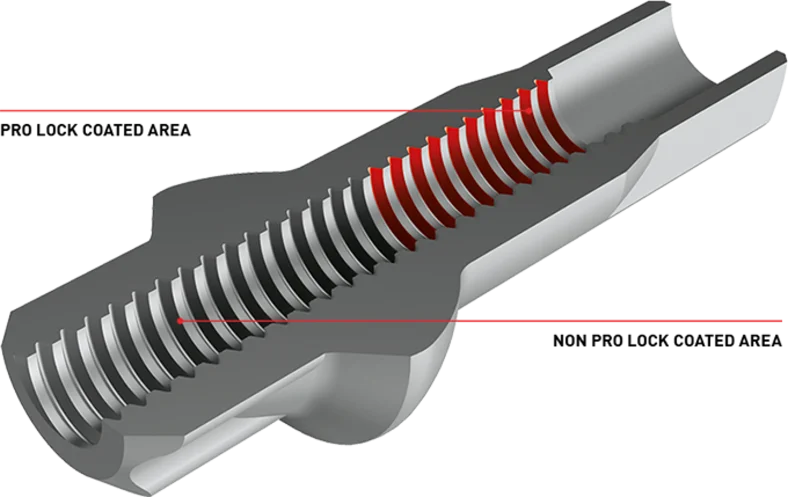
In this case, one would just need to lubricate nipple heads to remove friction created in the nipple bed. On the other hand, encountering DSN-type nipples from a renowned brand, with a self-locking mechanism based on a tapered thread barrel instead of being coated with a Loctite solution, adding a lubricant to reduce friction when working at high tensions is still needed.
When you overdo it
As with any aspect of wheel building applying some common sense to the process will help you achieve the right amount of it and not overdo it. Regarding thread preparation, subjected to fear of spokes loosening, novice wheel builders usually resort to strong compounds that act to a large degree like glue.
I cannot agree more with a fellow wheel builder’s opinion about using such aggressive anti-seize fluids “In my view, tight thread lock or even glue is like putting a ketchup on a menu of a Michelin Star decorated chef. If a wheel builder needs to lock down the nipples, then something is wrong with the build anyway.”
Just as a reminder, at this point, it should probably be best to keep in mind that somewhere in time, you will most likely get the wheel back for service, only to unleash your anger at your practices that made the wheel pretty much cemented like a stone fix.
Final thoughts
The overall goal of spoke and nipple preparation is to create a wheel that is strong, durable, reliable, and high-performing. Many newcomers, however, are unaware of its importance and tend to rush through or entirely skip this crucial phase, leading to poor spoke treatment and compromised wheel quality.
Though it slightly increases the build time, proper spoke and nipple preparation pays off by reducing friction, providing smoother tensioning, and preventing the possible loosening of spokes. It also enhances corrosion resistance, significantly improving the wheel’s longevity and reducing future maintenance needs.
While there is no universal method for spoke and nipple preparation, including insights and tips from experienced wheel builders can be immensely beneficial. By incorporating a blend of tips, tricks, and preferences from those with extensive hands-on experience, readers can better understand and implement effective spoke and nipple preparation techniques.
Enjoy wheel building!
About author

Aljaž Trenta
Author and founder"As a cycling enthusiast, bike mechanic and self-taught web designer, combining several of my passions and skills to build SpokeCalc was a great fun for me."