Note: All components were sourced from the Wheel Parts (www.wheel-parts.shop), a wheel-building store in cooperation with Alpina NL. Many thanks to them for giving me the opportunity to test the spokes so early!
The new era of wheel building
Although carbon fibre spokes aren’t entirely new to the wheel-building world, it’s clear the field is still climbing an exponential learning curve — with fresh ideas and approaches to carbon use seemingly reinvented daily.
So when one of the industry’s major spoke manufacturers releases its own take, it sends an echo and a strong message through the scene. Naturally, I had to put them to the test in one of my recent builds. And what better way to experience them than with my own newly released digital spoke tension meter — the SpokeCalc DTM?
Note: Carbolite is the market friendly model name of a new carbon spoke from the Italian spoke manufacturer Alpina Raggi.
FIRST IMPRESSIONS
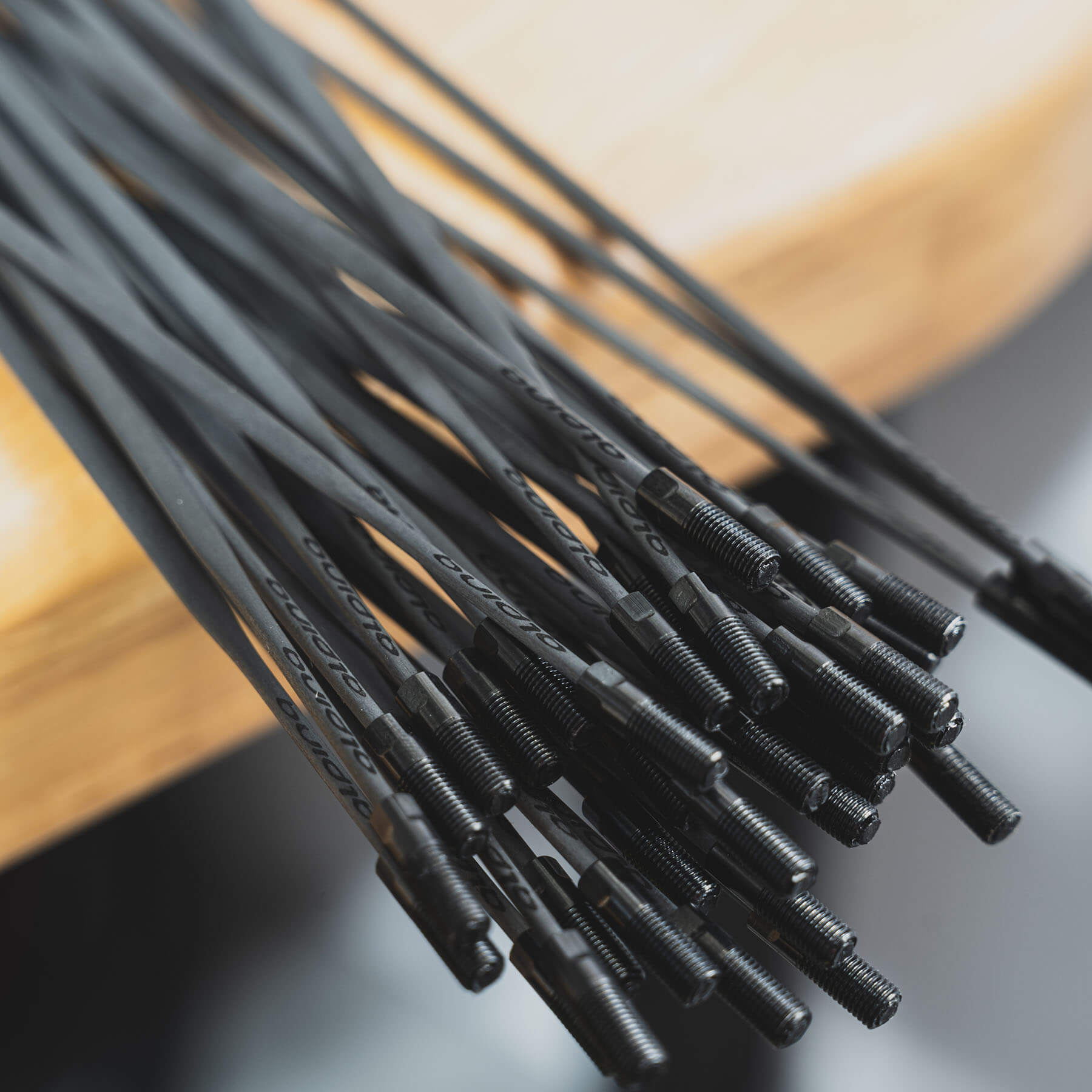
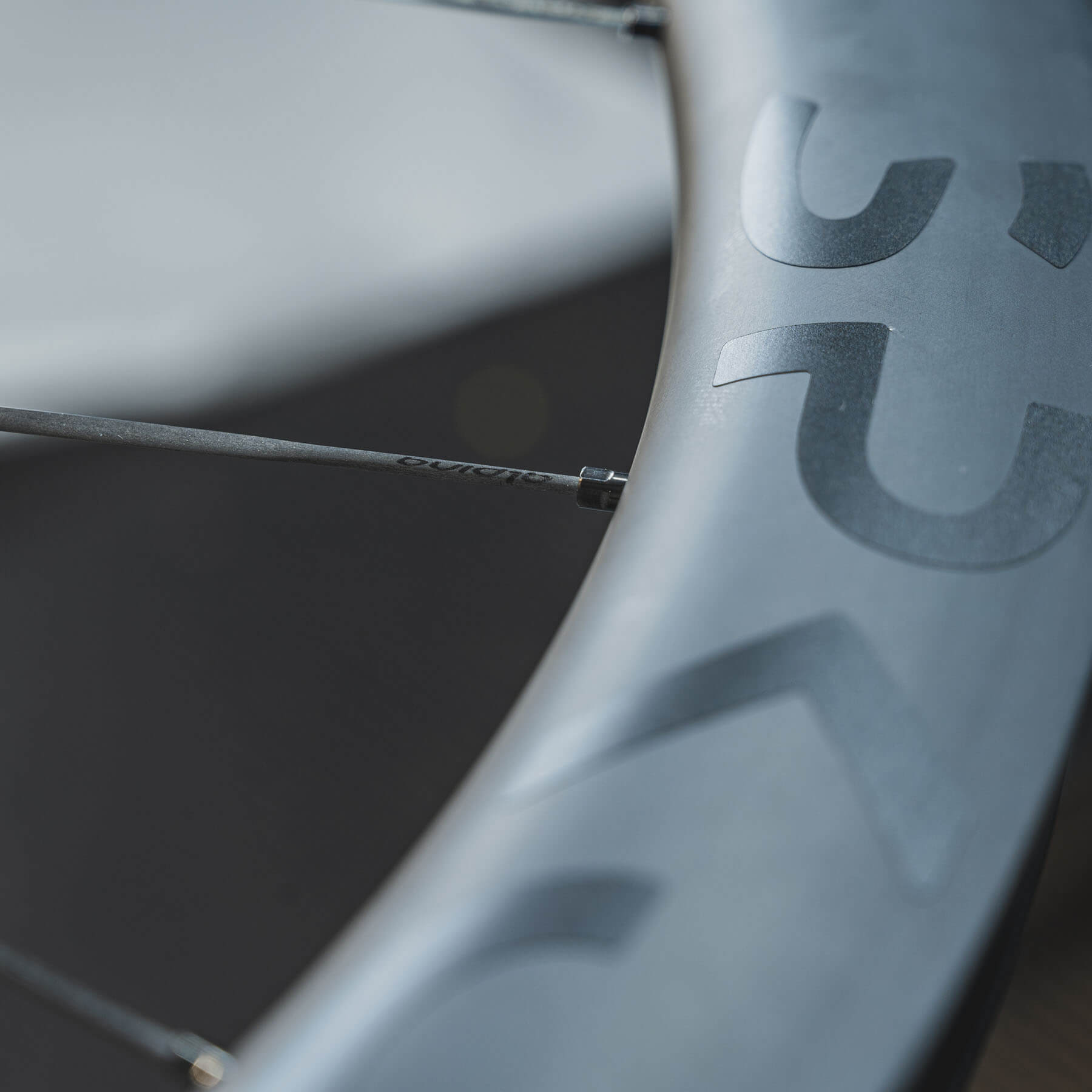
First impressions, you ask? They definitely feel premium — no doubt about it. The build quality is top-notch, with a smooth carbon fibre surface, uniform looks, precise threading, and a clean coating. The black logo is a subtle but sharp finishing touch.
The thing about carbon spokes is that while they can handle incredible tensile strength, they’re less tolerant of torsional forces or side flex (think squeezing). Being aware of those limitations is key — and might save you from a failure mid-build.
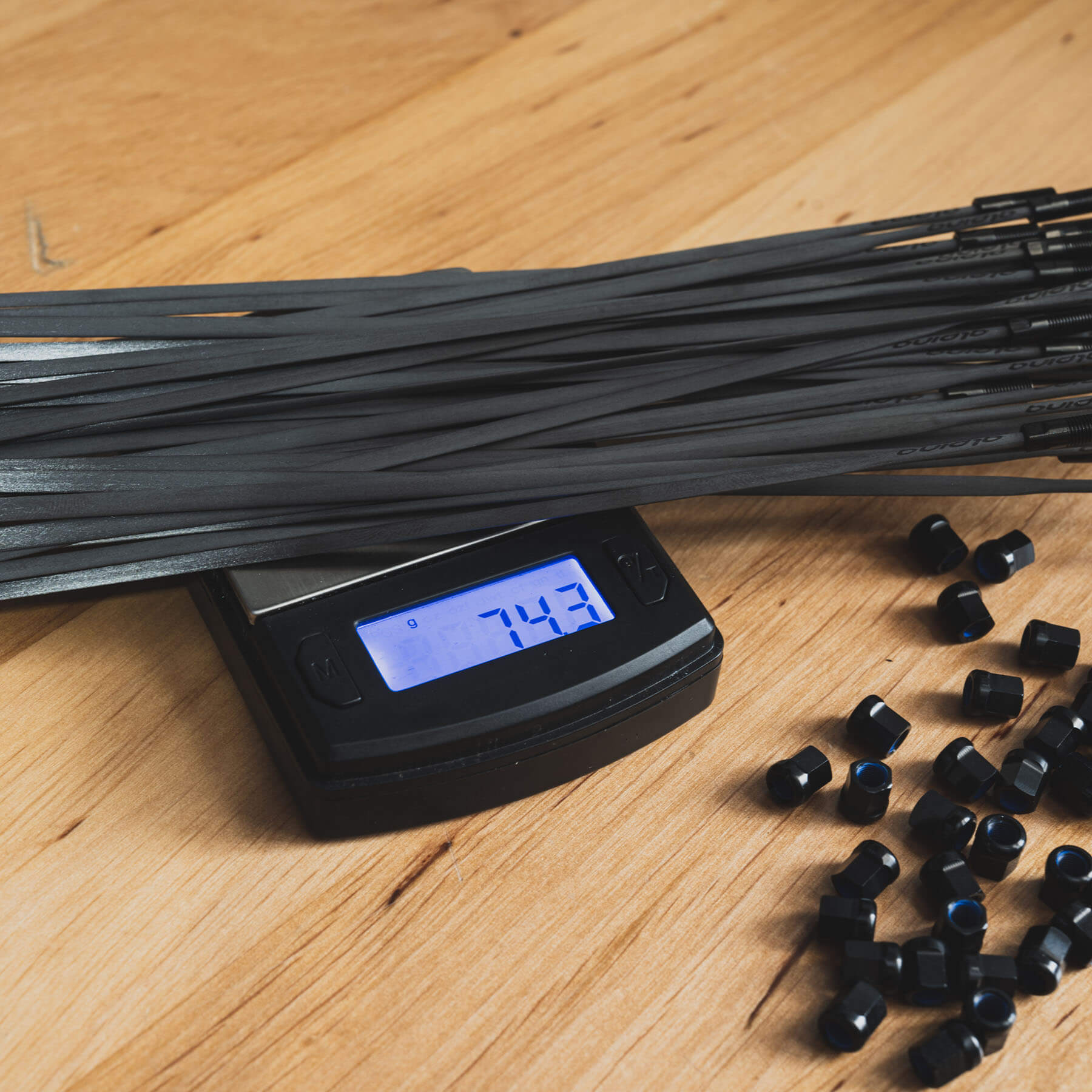
But where they truly shine is weight. At a claimed 2.1g per spoke, they’re a guarantee for a feather-light build. Just imagine: a full set of spokes for both wheels weighing in at only 75 grams. Holding them felt like picking up a handful of zip ties — a weird sensation, especially considering how incredibly strong this material actually is.
Continue this article to read more about my build experience and real hands-on impressions.
Build requirements
After posting an early build announcement on my Instagram channel, I started getting questions from fellow builders — mainly around the requirements for using Alpina’s Carbolite spokes. The most common one was: Do you need a special hub–rim combo to build with them?
Unfortunately, yes.
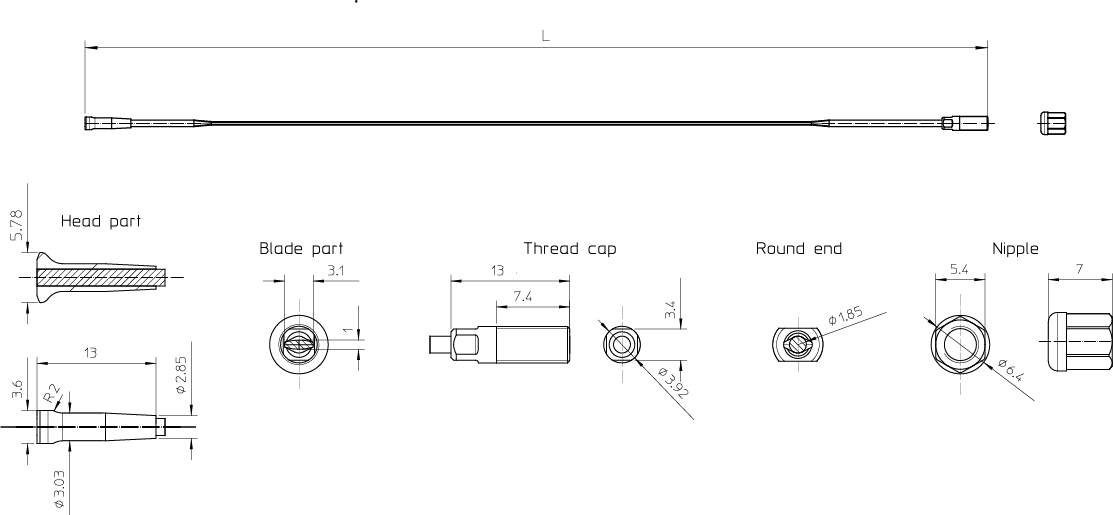
The spokes measure 3.03 mm at the hub end, so your hub better have spoke holes drilled slightly larger and be compatible with the T-shaped spoke head, also commonly referred as the T-Head. This specific design prevents spoke twisting and ensures proper seating.
And the rim? According to Alpina’s technical data, since the alloy thread inserts on the spokes measure 3.92 mm in diameter, the rim holes must match that size — though most standard rims should work fine. Plus — and this is critical — a "tapeless rim" is a no-go. These spokes use hidden internal nipples, so you'll need free access through the rim bead during the build
Take a closer look at the drawing below for some technical visuals on the spoke's design.
When it comes to tools, the good news is you won’t need anything exotic.
- Commonly used 3.3 mm nipple key should suffice to hold the spoke firmly just above the rim surface.
- Tensioning is done from the inside using a 5.5 mm internal hex key, which is a pretty common size in the wheel-building world.
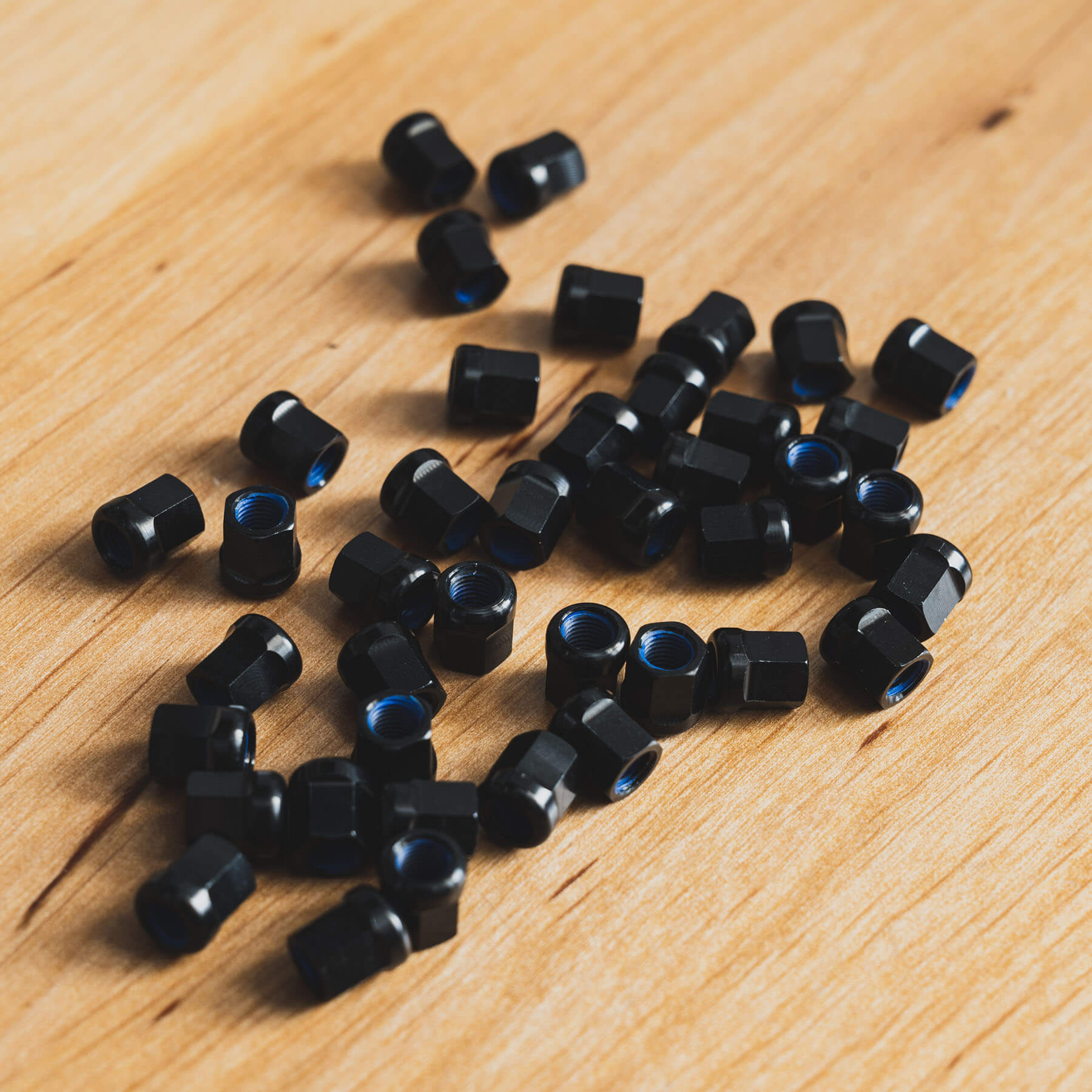
The nipples however are large, hexagonal alloy internals, coated inside with Alpina’s proprietary ABS blue compound. This coating runs the full thread length and prevents loosening from vibration — so no special spoke prep is required. As you bring the tension up, the resistance increases in a smooth, linear way, making it easier to dial things in precisely.
About the build
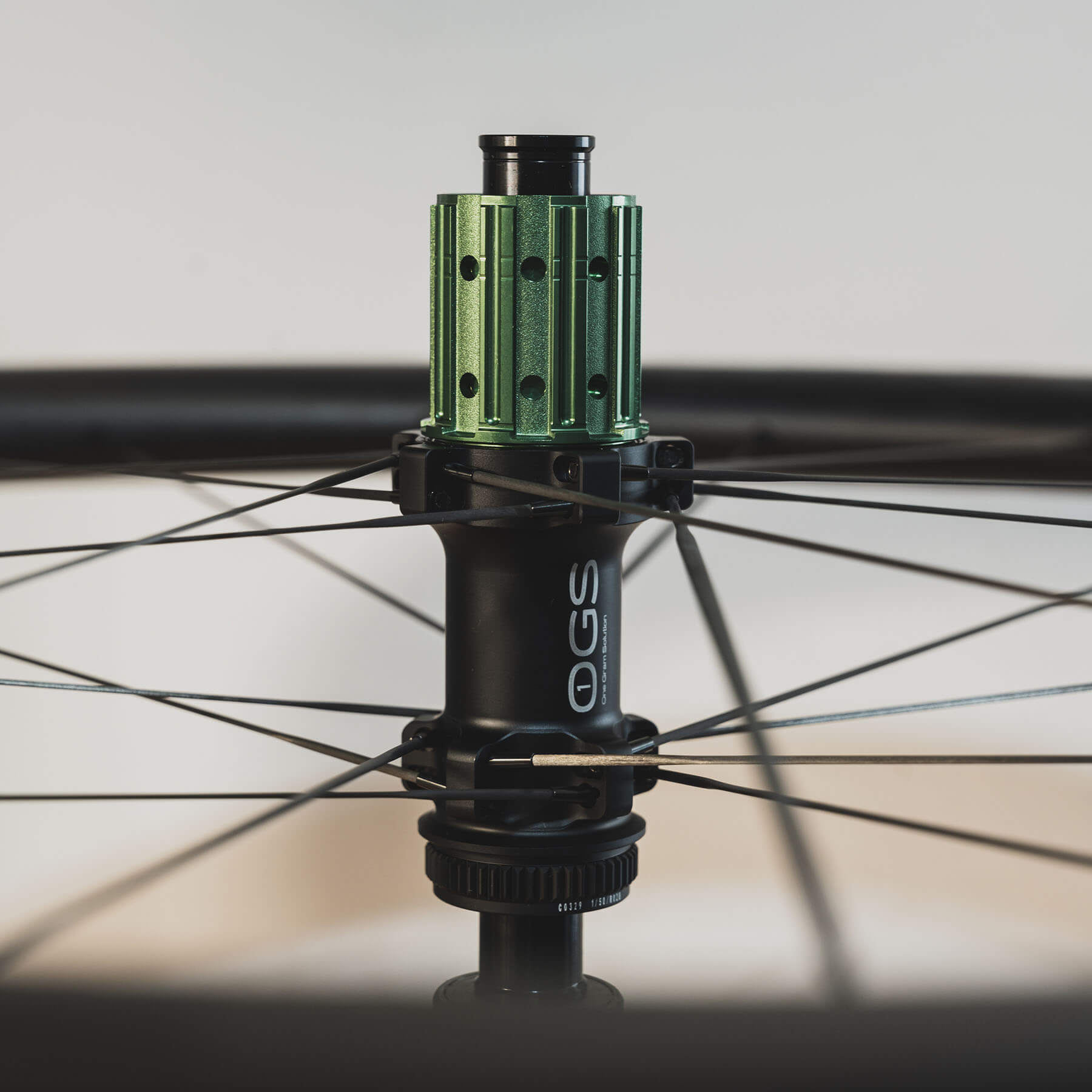
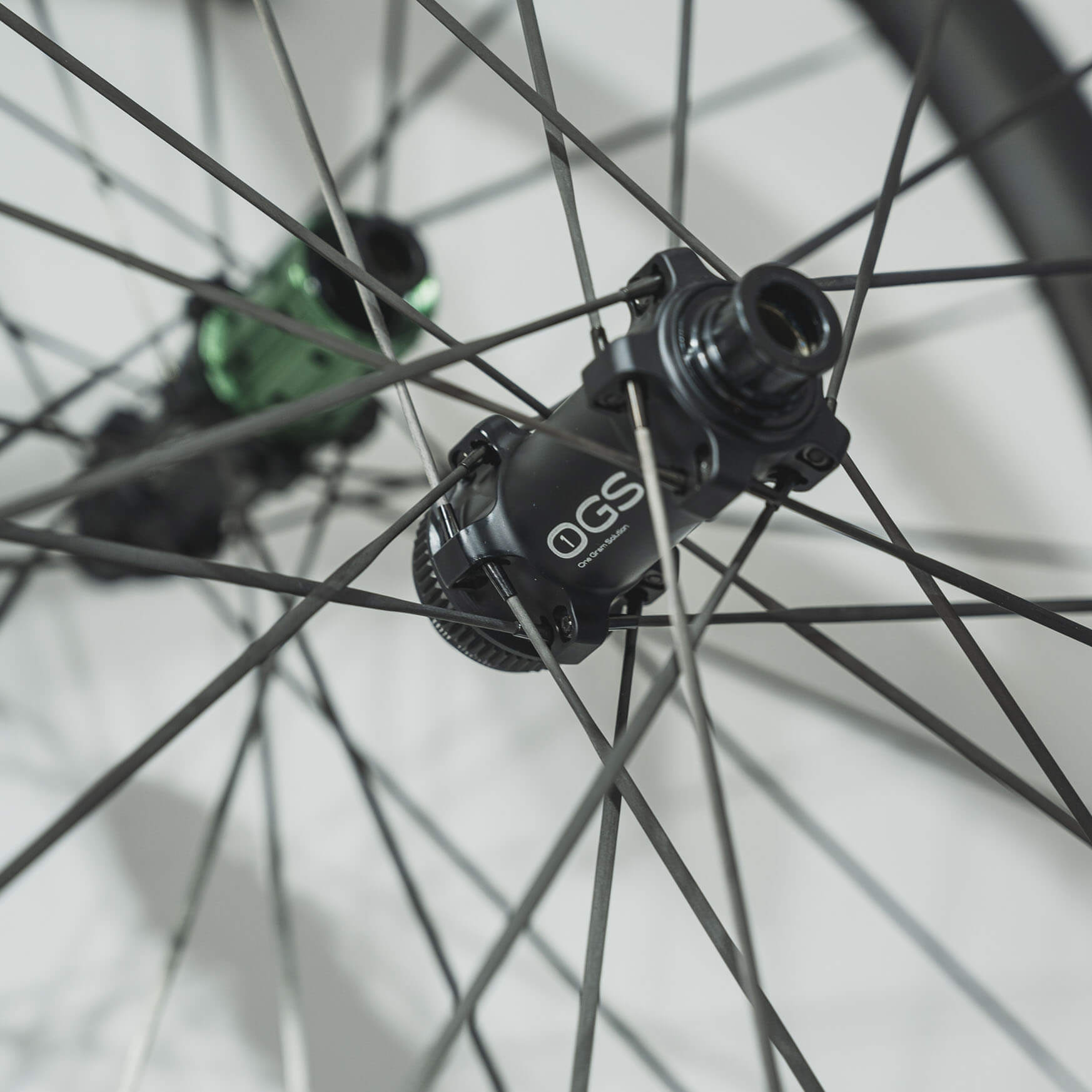
It’s no secret — all components for this build were sourced from the Dutch store Wheel Parts, and here’s a big thanks to them. They’ve made it easy for builders to get hands-on with Alpina’s new spoke material by offering DIY kits: exact counts and lengths of Carbolite spokes, matched hubs (their own One Gram Solution series), and compatible rims.
This kind of setup takes the stress out of figuring out compatibility — no guessing, no surprises, and no hidden costs from miscalculations.
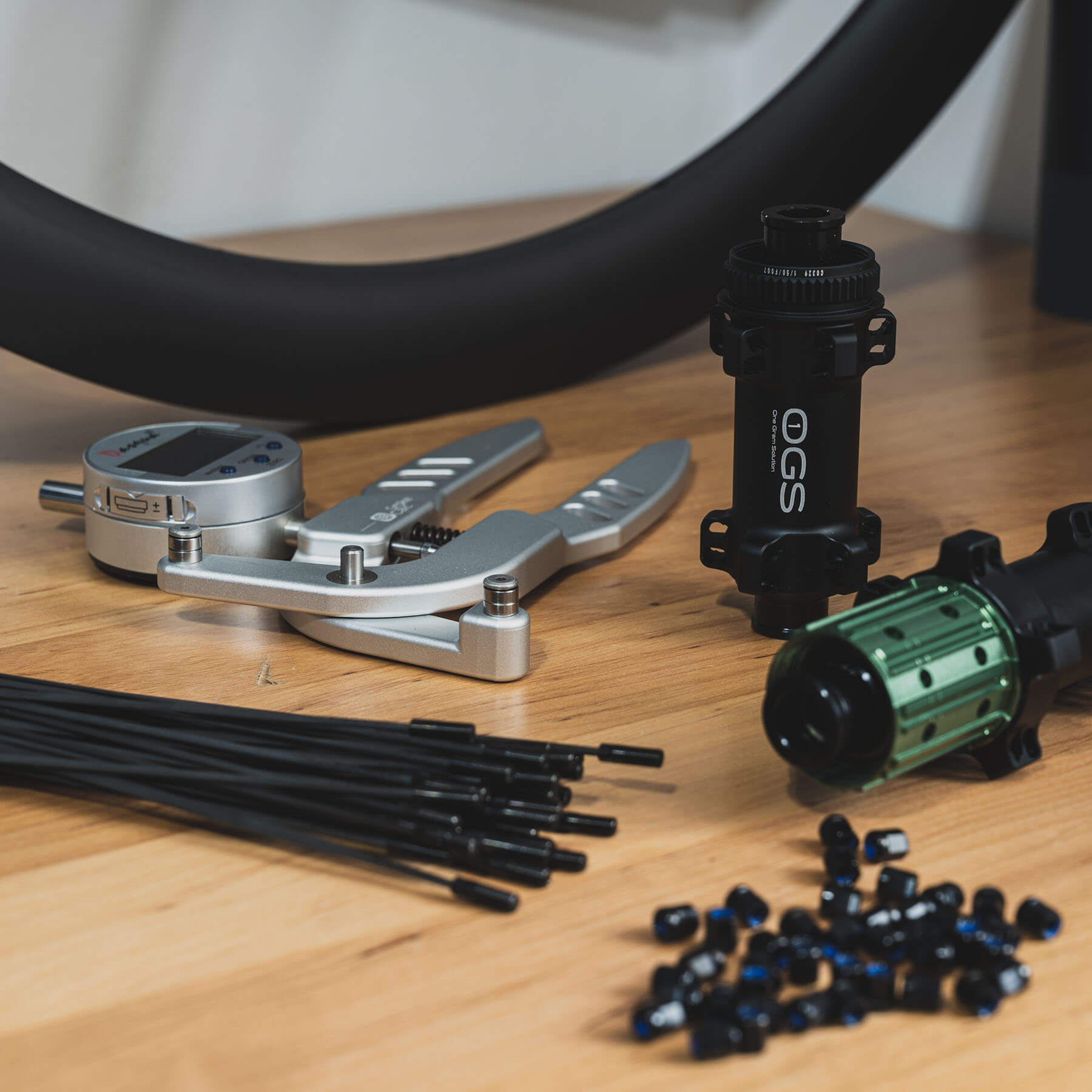
And the best part? All spoke lengths were calculated by me using the SpokeCalc spoke calculator. Interestingly, the spoke length differences between sides and wheels are just a few tenths of a millimetre — so my recommendation was to supply a single length (284 mm) for the entire build. All in all, super clean and straightforward.
Tip: If you're using the SpokeCalc app, you can import the Alpina Carbolite spoke into your Component Manager to have it ready in your list for future builds.
Build preparation
Before diving into the build, I had to introduce the Carbolites to my SpokeCalc DTM digital tension meter — meaning, of course, a proper calibration was in order. The tool needed to be tuned specifically to read tension values from these oversized carbon spokes.
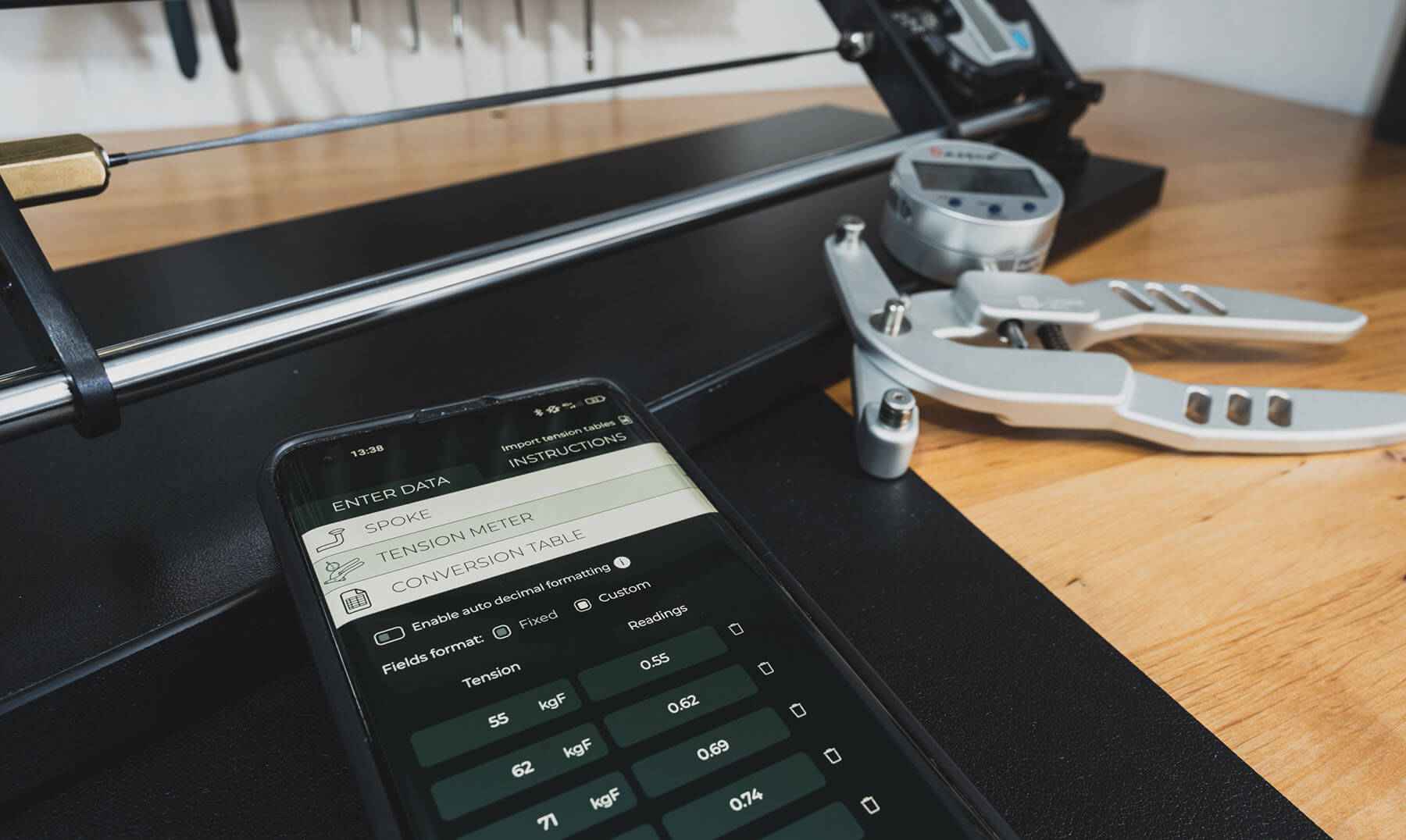
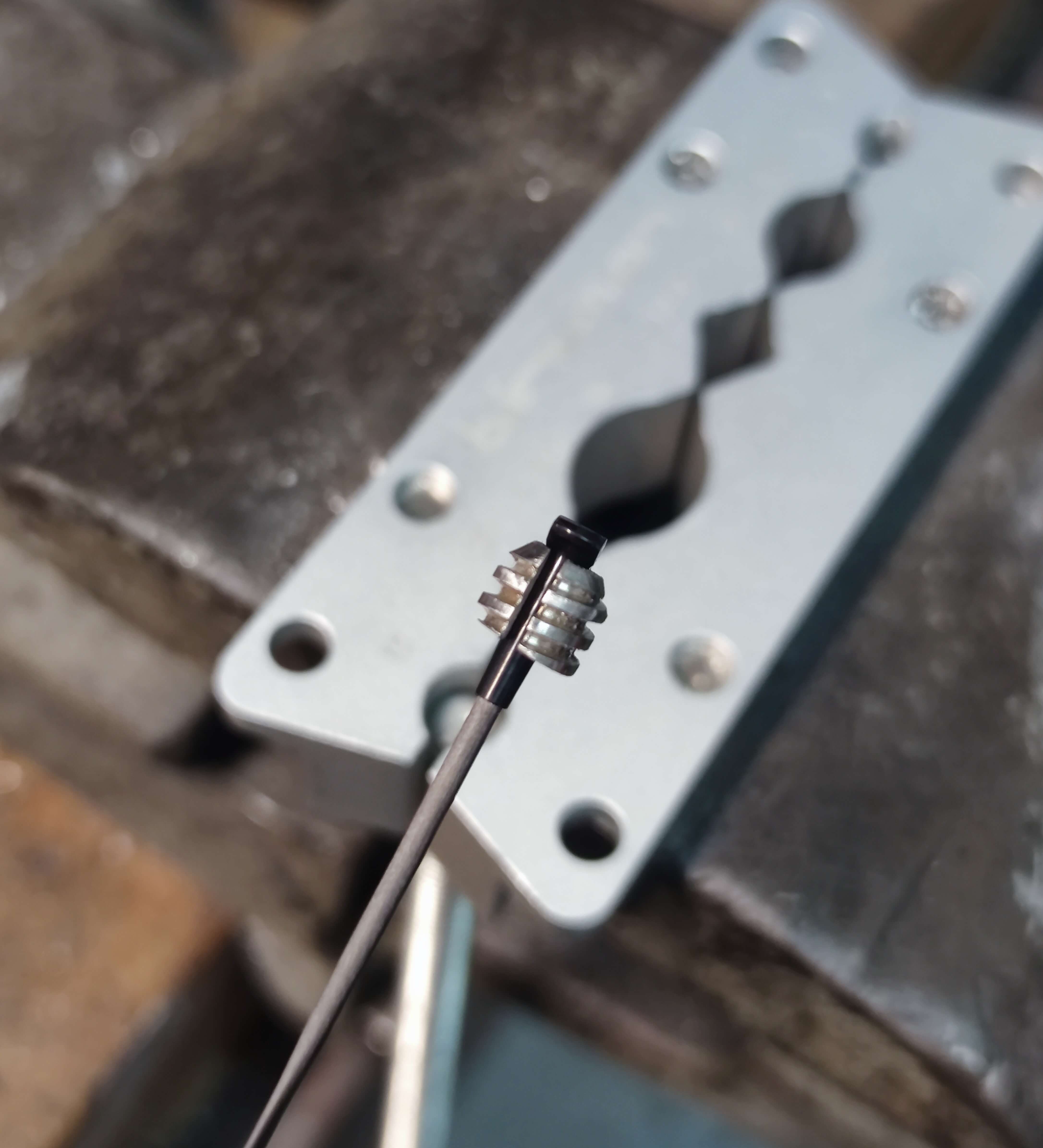
But first things first — the T-shaped spoke heads meant I had to fabricate a custom mount for the calibrator. These spokes are larger than standard, and a conventional setup just wouldn’t do. The upside? The new mount should also come in handy for future spoke models with non-standard heads.
You may have already noticed the SpokeCalc DTM featured in the photos — and yes, this is a new silver model I recently received. It comes in a lighter color scheme with a subtle white SpokeCalc logo, paired with a silver Italian Dasqua dial indicator. The combo looks clean, precise, and, well... an elegant personal touch, if you ask me.
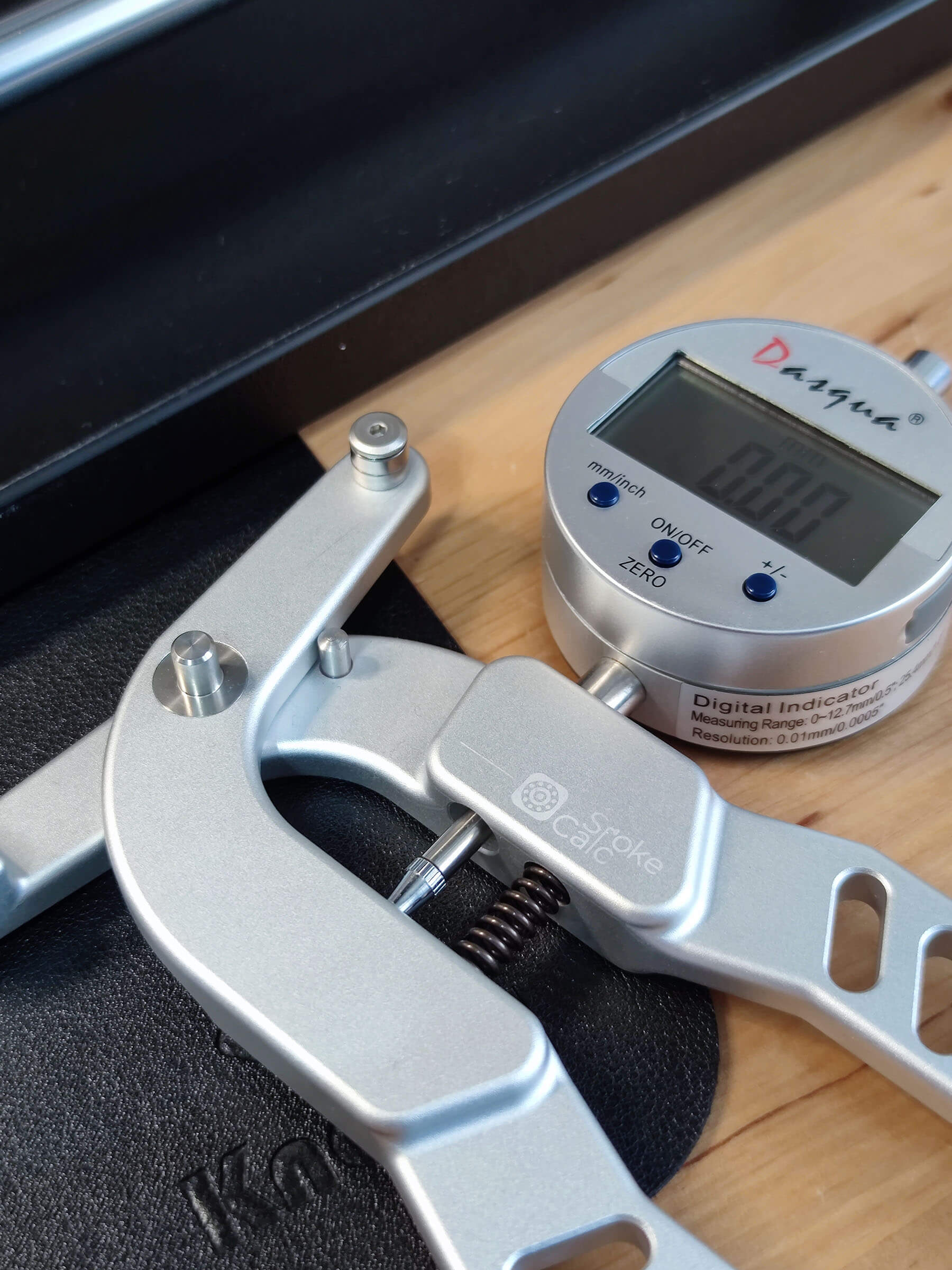
The Tensio was designed with ergonomics in mind — meant to be held confidently, without fatigue. At just around 290g, it handles with ease, especially during longer calibration or measurement sessions.
This version isn’t wireless, but it features a micro USB port, so you can plug it into your workstation — whether it’s a laptop, desktop, or even a foot-pedal setup — for a fully digital workflow.
Insights from the build itself
The real impressions started to surface during the build — once I had my hands on the spokes and began the process, experiences started to confirm my theory. Here are a few main things I noted along the way:
- Elastic elongation (contrary to common belief): While carbon spokes are often assumed to be extremely stiff with minimal stretch, measurements tell a different story. At 120 kgF, Alpina Carbolite spokes showed ~1.25 mm of elongation. This is aligned to performance-oriented stainless steel aero spokes and confirms that high strength does not imply high stiffness; controlled elasticity is very much part of their behavior during tensioning.
- Fewer spokes equals more sensitivity: The 1x lacing pattern with only 20 spokes per wheel (front and rear) makes every adjustment even more impactful. With lower spoke counts, each nipple turn carries more weight — literally — on wheel balance and tension uniformity. Something to be extra mindful of.
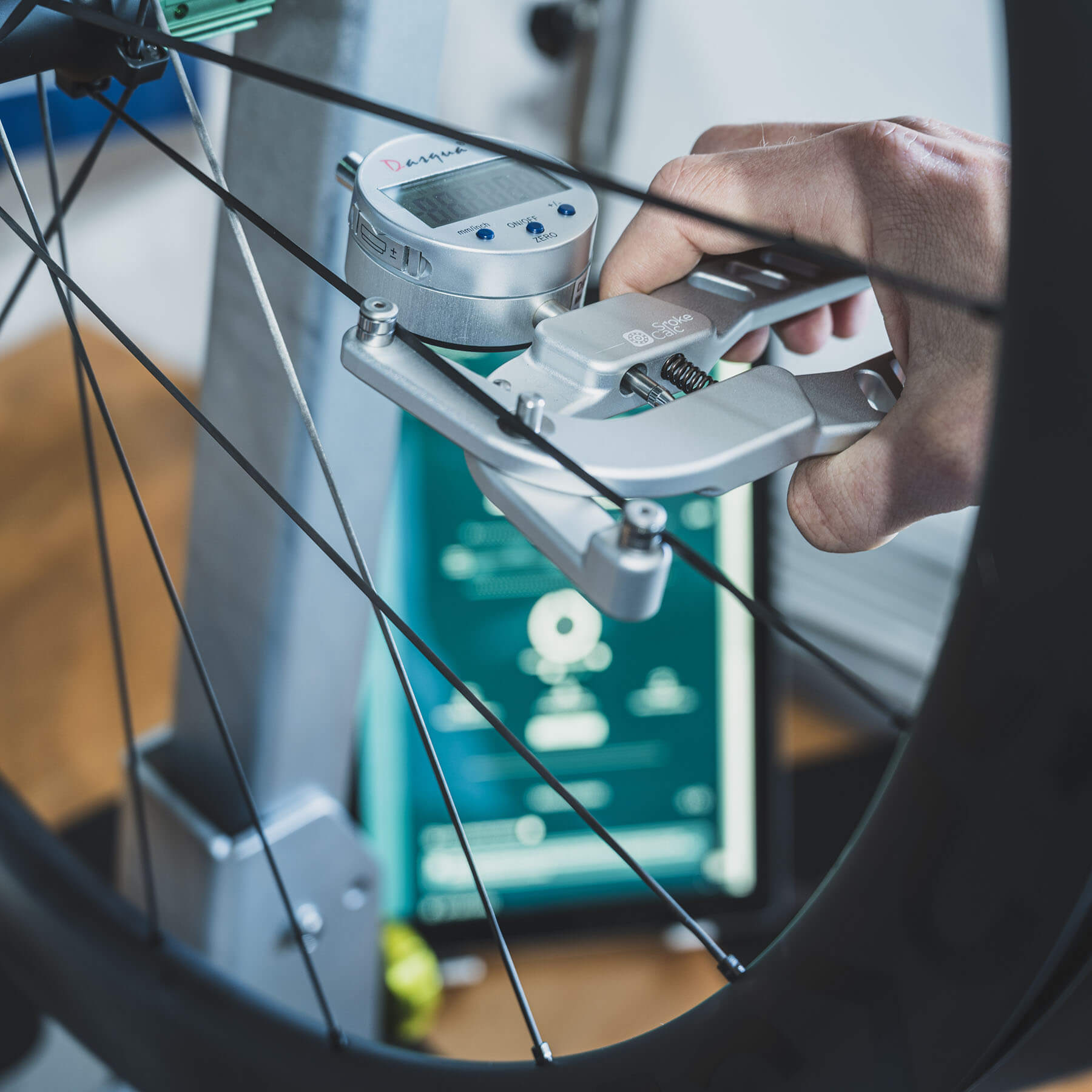
- Nipple threading trick: I started by threading the spoke nipples onto the spokes until the threads just began to disappear inside the rim. From that point, I counted turns for consistency. Repetition in this step ensured a consistent thread engagement across the wheel. Note, being slow here will speed up the final stage of the build!
- Beware of twist: Carbon spokes don’t like to be twisted. Take special care during lacing and tensioning not to introduce any excessive torsional force. I highly recommend a stepped increase in tension, and closely watching each T-head settle into its slot. If you're not paying attention, it’s easy to miss a misaligned spoke head — and that’s not something you want to discover late in the process.

Plenty of carbon, yet low weight
Without any further due, below are detailed visuals about the final build. Enjoy!


FINAL THOUGHTS
I’ve been wanting to get hands-on with the emerging wave of new-material spokes for a while now — and getting the chance to do so with a reputable name like Alpina was a reassuring place to start. Carbolites didn’t disappoint.
I’ve never been particularly fond of the idea of reshaping carbon spokes to fit traditional stainless steel hub setups, so Alpina’s dedicated approach here made sense — and felt right.
Sure, there are material-specific quirks to keep in mind — like avoiding deflection and torsion, and approaching tensioning gradually and deliberately — but these are manageable considerations rather than major hurdles. Once you respect those rules, the build flows naturally.
If you're chasing a truly featherweight yet solid wheelset, Carbolites are absolutely worth a try. They bring something fresh to the table — both in feel and performance — and offer builders a new kind of experience with carbon.
Enjoyed this article?
Buy me a coffee to support my work!
Every coffee helps fuel more content like this!
About author

Aljaž Trenta
Author and founder"As a cycling enthusiast, bike mechanic and self-taught web designer, combining several of my passions and skills to build SpokeCalc was a great fun for me."