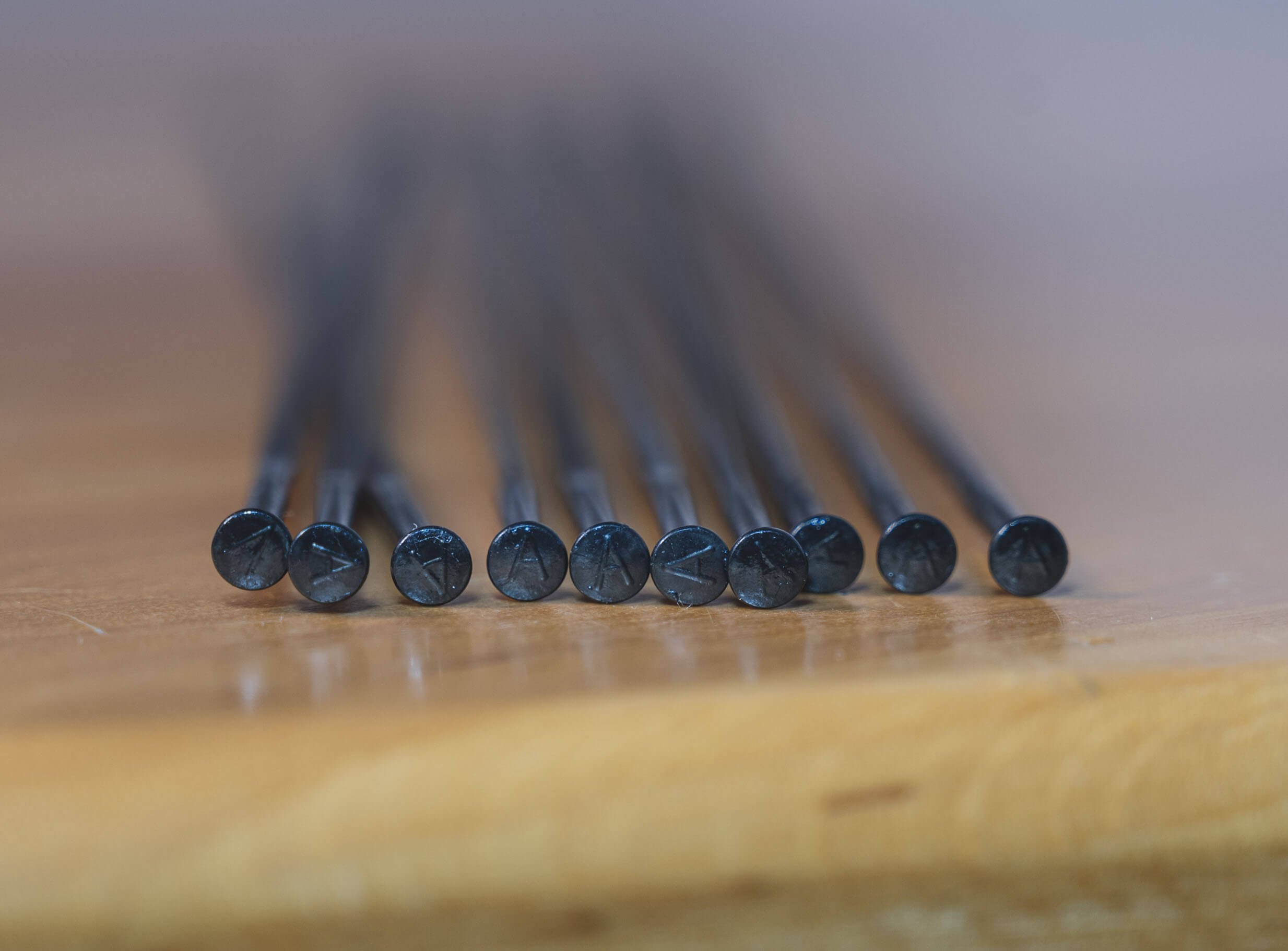
Note: The spokes were kindly supplied by Wheel Parts (www.wheel-parts.shop), a wheel-building store in cooperation with Alpina NL. Many thanks to them for giving me the opportunity for a closer inspection!
THE HERITAGE OF ALPINA RAGGI
The truth is that, to the wheel-building novice, it might seem like the world of spokes begins and ends with Sapim or DT Swiss — but within the spectrum of alternatives, the Italian company Alpina is rapidly gaining momentum, showcasing their dedication to quality and leaving a strong mark on the industry.
In fact, Alpina Raggi, as it’s originally known, is far from being the new kid on the block. With a full century of existence to celebrate next year, this Italian company undoubtedly brings plenty of experience to the field, standing as a testament to expertise and innovation.
Starting in the motor bike industry, Alpina Raggi made their initial mark before transferring knowledge and spreading focus to bicycle spokes in the mid-1970s. And with strong connections to wheel builders around the world, I’ve noticed a growing consensus that the company’s recent efforts are earning it renewed recognition in the industry.
Having recently built a wheelset with their Ultralite Aero spokes, which you might find interesting in the article Carbon Chronicles — a review of the rest of their product range that follows will be a real treat for any wheel enthusiast. So, keep on reading.
ALPINA RAGGI'S SPOKE RANGE
Like any other spoke manufacturer, Alpina offers wheel builders a broad range of spokes designed to meet all kinds of requirements and disciplines. However it may take a minute or two to get accustumed with their categorization system of bicycle spokes.
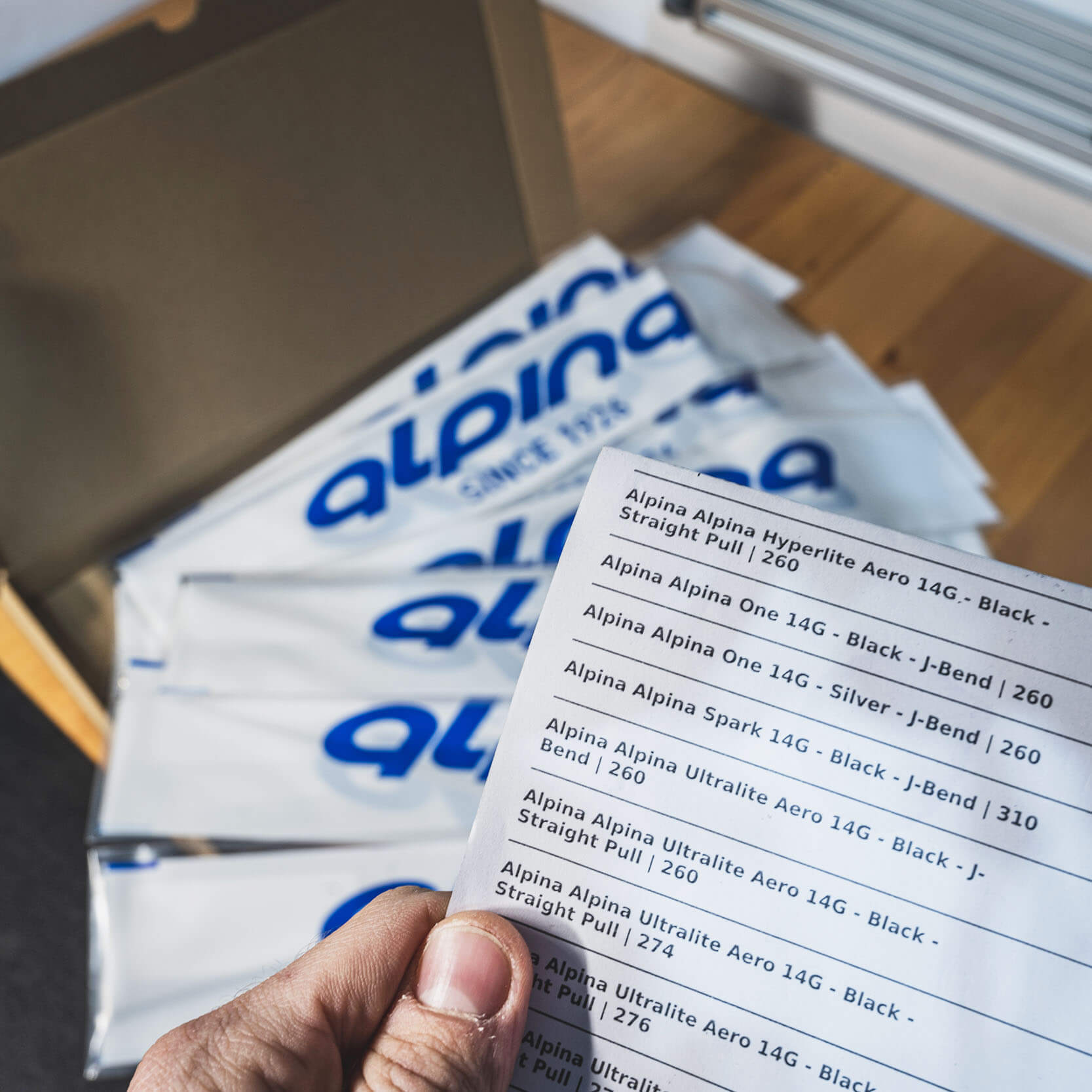
Since this was a new experience for me, I took a closer look at Alpina’s website to explore their range of spokes.
What caught my eye was the intuitive naming system, where spokes are categorized in ascending order such as Superlite, Extralite, Ultralite, or Hyperlite (the most advanced, obviously), with each category encompassing both round and aero (bladed) spokes.
Deciphering these names provides a clear indication of where a spoke falls within the price and premium range. Below is a simple cheatsheat of spoke models with dimensions to provide an insight into their spoke range.
| Model | Shape | Dimension |
|---|---|---|
| Alpina One | Round / Plain | 2.00 mm |
| Alpina One XL | Round / Plain | 2.30 mm |
| Alpina One XXL | Round / Plain | 2.60 mm |
| Alpina Spark | Round / Butted | 2.00 / 2.30 mm |
| Alpina Spark XL | Round / Butted | 2.30 / 2.60 mm |
| Alpina Basiclite | Round / Butted | 2.00 / 1.80 / 2.00 mm |
| Alpina Extralite | Round / Butted | 2.00 / 1.70 / 2.00 mm |
| Alpina Superlite | Round / Butted | 2.00 / 1.60 / 2.00 mm |
| Alpina Ultralite | Round / Butted | 2.00 / 1.50 / 2.00 mm |
| Alpina Hyperlite | Round / Butted | 2.00 / 1.50 / 1.30 / 1.50 / 2.00 mm |
| Alpina One Aero | Flat / Aero | 2.00 / 2.30 x 1.70 / 2.00 mm |
| Alpina Basiclite Aero | Flat / Aero | 2.00 / 2.30 x 1.40 / 2.00 mm |
| Alpina Extralite Aero | Flat / Aero | 2.00 / 2.30 x 1.20 / 2.00 mm |
| Alpina Superlite Aero | Flat / Aero | 2.00 / 2.30 x 1.10 / 2.00 mm |
| Alpina Ultralite Aero | Flat / Aero | 2.00 / 2.30 x 0.90 / 2.00 mm |
| Alpina Hyperlite Aero | Flat / Aero | 2.00 / 2.20 / 2.00 x 0.90 / 2.20 / 2.00 mm |
ALPINA ONE
Before diving into the most advanced spoke in their range, it’s worth noting that the majority of wheel builders will first think about the most common option: the round, plain gauge 2.00 mm spoke.
Conveniently named - Alpina One – appears to be the workhorse of their lineup, specifically designed to compete with the Sapim Leader and DT Swiss Champion in this category.

Note: While building a wheelset, I noticed that the Alpina spokes were less oily compared to those from other brands. A quick chat with a builder from Germany confirmed my observation. It’s certainly a small detail, but one worth noting. Especially after a long day of wheel building when such little conveniences tend to add up.

Receiving a set of round spokes, I was curious to see if a precise tension meter would reveal any differences between round shaped spokes of the same dimensions but different brand, whether plain gauge or butted type. Since material properties can vary slightly between spoke manufacturers, so can the tension charts for spokes within the same category. For this reason, wheel builders who predominantly use one spoke company, should calibrate their tension meters specifically for the models of the manufacturer they work with.
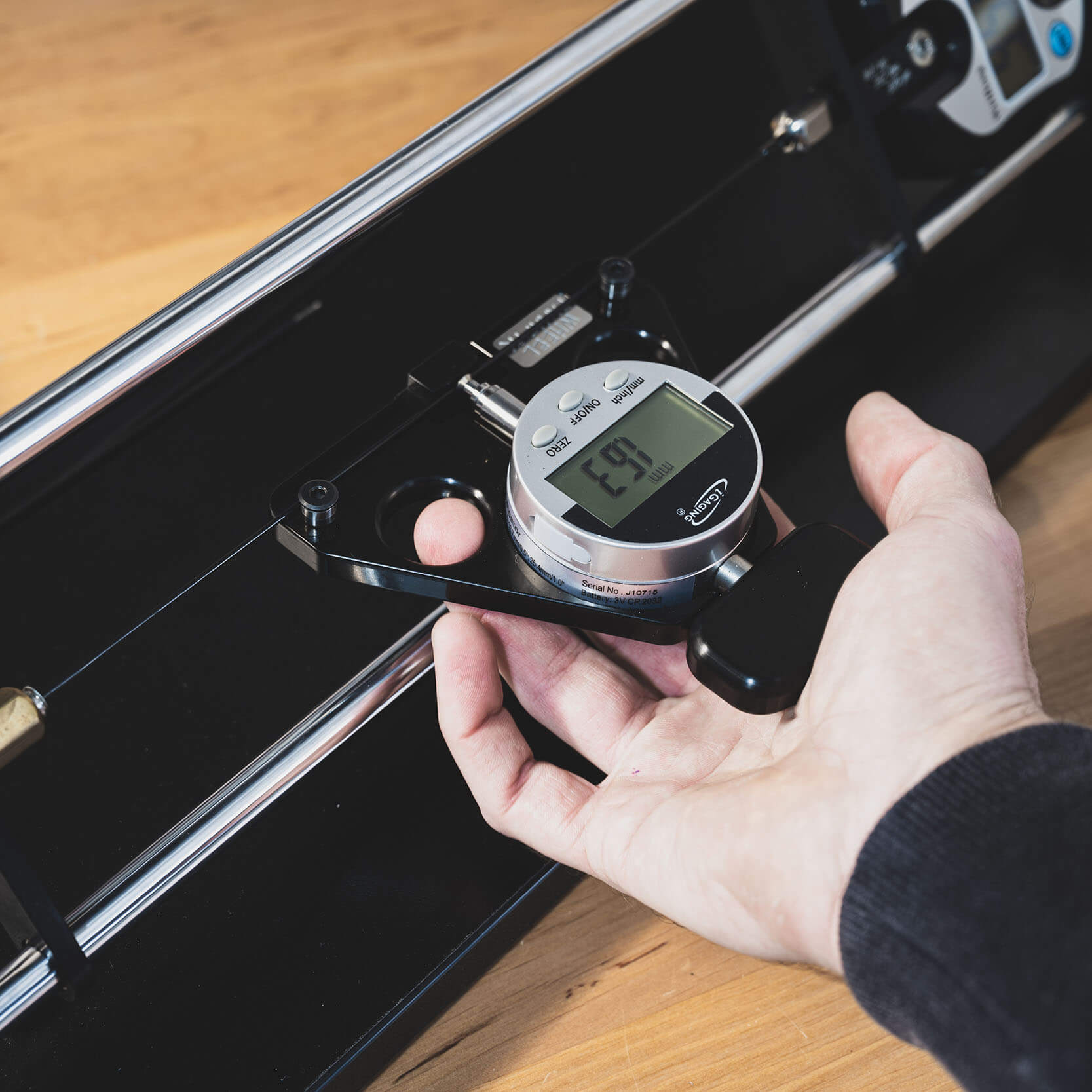
A brief test confirmed my previous experience: DT Swiss spokes tend to show slightly lower readings compared to Sapim, while Alpina spokes delivered readings very similar to those from Sapim. When referencing the same category (dimension) of spoke, you can rely on consistent measurements without the risk of noticeably faulty readings.
| Spoke model | ≈ 95 kgF | ≈ 120 kgF |
|---|---|---|
| Sapim Leader (2.00 mm) | 1.61 | 1.58 |
| DT Swiss Champion (2.00 mm) | 1.60 | 1.57 |
| Alpina One (2.00 mm) | 1.62 | 1.58 |
| Sapim Laser (1.50 mm) | 1.69 | 1.62 |
| DT Swiss Revolution (1.50 mm) | 1.67 | 1.60 |
| Alpina Ultralite (1.50 mm) | 1.69 | 1.63 |
Now, onto the more intriguing bladed spoke range from Alpina.
Aero (Bladed) Spoke Range
As mentioned earlier, the naming system remains consistent, with the addition of Aero to distinguish the bladed options. The most common offerings include the Superlite, Extralite, and Hyperlite, categorized by weight / performance, respectively.

Of course, each spoke is designed to compete within its respective class. The three mentioned above aim to challenge the dominance of Sapim CX-Ray and DT Swiss Aerolite in the pure race segment, while the Extralite targets CX Sprint’s territory, catering more to OEM supply for wheel manufacturers.
A special mention here goes to the Hyperlite Aero spoke. With such ultra-lightweight spoke it can rival even newer materials like carbon fiber. As its featherweight design suggests, it’s a sensitive yet race-bred spoke, particularly well-suited for deep-section performance wheels.
To me, the most fascinating detail about this model was its unique cross-section—2.00 / 2.20 / 2.00 x 0.90 / 2.20 / 2.00 mm. This design enhances both aerodynamic and structural properties while maintaining a sleek profile. Notably, after tapering the material from round to a bladed shape, the first section is slightly wider, followed by another tapering. It’s a definitely a distinctive feature that you probably won't encounter elsewhere.

Of course, working with such spokes demands precision in tension balancing and careful consideration of another critical factor — spoke stretch. Bladed spokes with such cross section area can easily stretch up to 1 mm when under full tension on a wheel’s drive side (e.g., the shorter-length side).
Having integrated a stretch calculator into my spoke calculator, I calculated a spoke stretch of 1.21 mm at 120 kg spoke tension for a normal geometry medium section wheel. Compared to a bit "thicker", yet still slick bladed part of the industry's golden standard - Sapim CX-Ray, this means approximately 0.20 mm of additional spoke stretch at identical, high tension. Keep that in mind when rounding up or down your spoke length calculations before ordering these spokes.

SPOKE NIPPLES
Interestingly, spoke nipples turned out to be a nice surprise. Being used to including a spoke-prep solution in the first stage (read more about spoke-prep techniques in the article here), I didn’t use any additional locking solution. Aligned with the opinion of some other wheel builders, many self-locking nipples can give the feeling of uneven tightening or even raise concerns about overtightening the spoke. Over the years, I’ve preferred to rely on an additional locking solution instead.

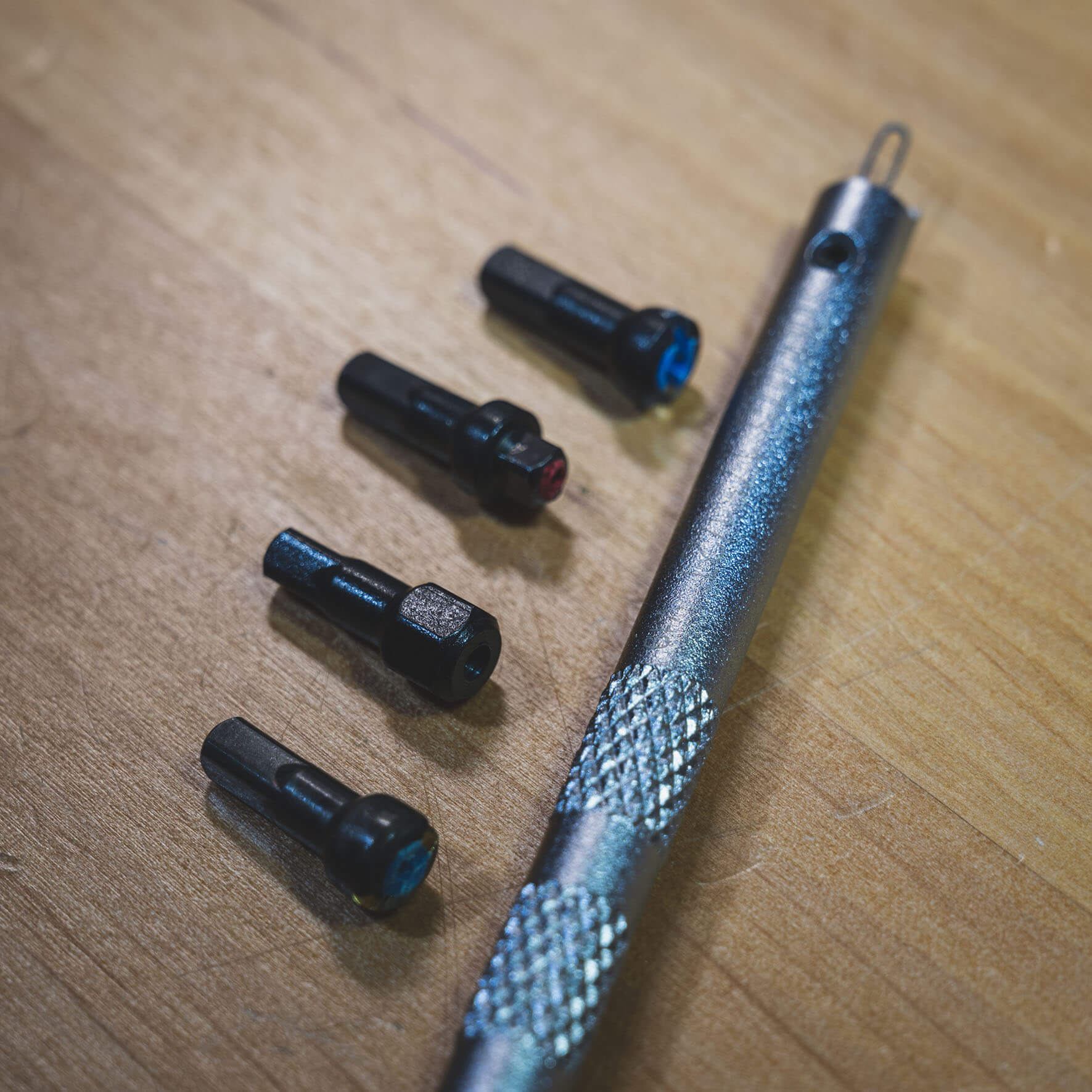
But an extra word needs to be said about the underlying locking mechanism technology. Take the Double Square Nipples (DSN) I used on my recent wheelset, for example. Alpina calls their red-color self-locking solution the ABT Locking (while the blue is known as ABS Blue Power), specifically designed to ensure correct tightening, prevent loosening, and improve vibration absorption.
So, how do they perform during wheel building? In my experience, using them was a smooth and trouble-free process—the kind where you almost forget to pay attention, which, when it comes to spoke nipples, is definitely a good thing. One less worry on your mind. But really, that confident feeling is, let’s face it, especially valuable when working with high-end, aero-shaped spokes. It’s a detail that makes a big difference.
Also, there were absolutely no signs of mis-threads or rough edges whatsoever—details that, in the end, really matter. And with various shapes, like the one shown in the image below, there are certainly plenty of options to choose from when selecting your preferred nipple type.
INTEGRATION TO SPOKECALC
After having this awesome experience of exploring the majority of their spokes at once, it was time to add spoke models into free spokecalc.io as System spokes – the feature where spoke length calculation displays also estimated spoke stretch and weight per calculated spoke length – and secondly, inside the App SpokeCalc.
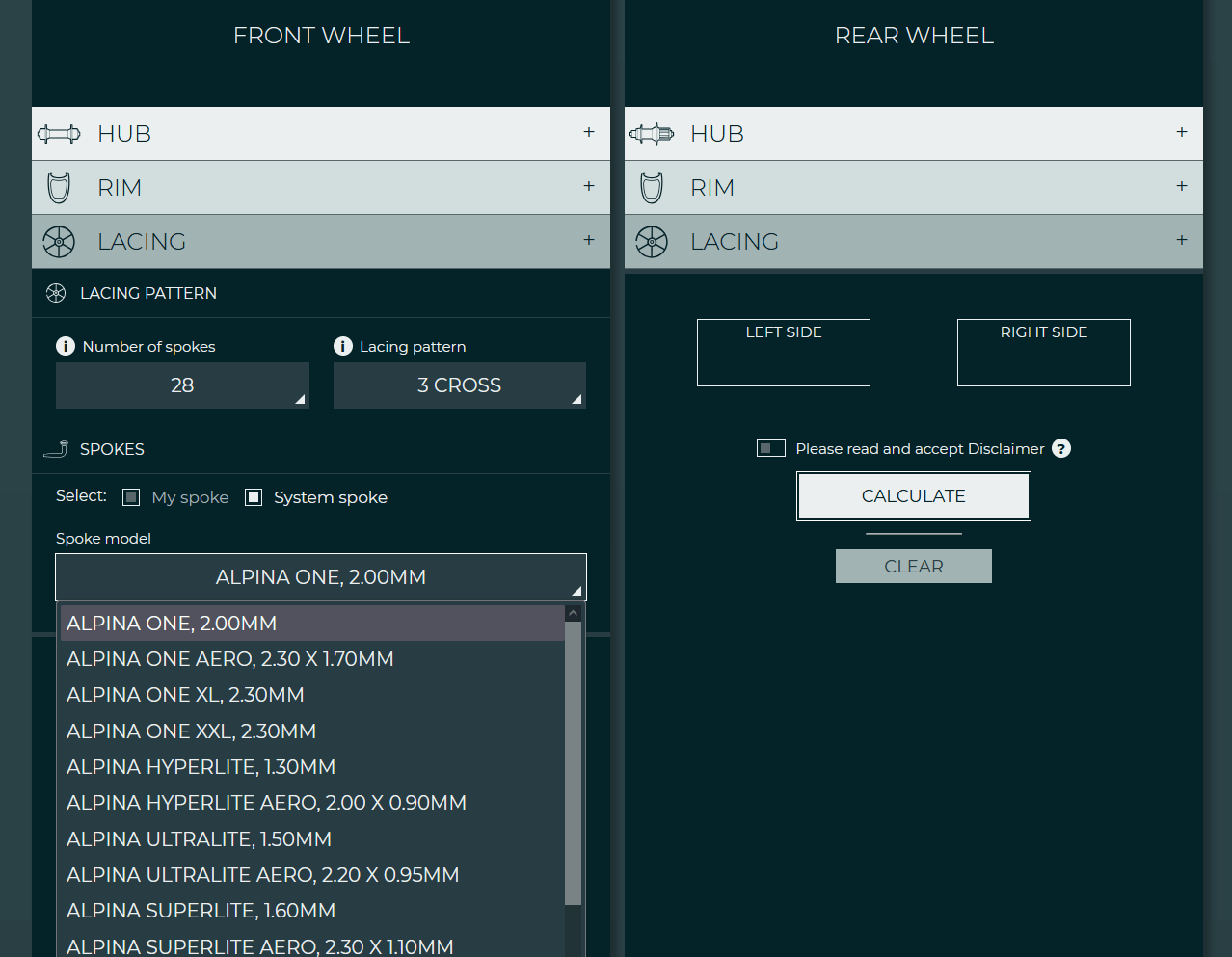
The spoke calculator inside the App Spokecalc received the same update, but the bonus here was saving Alpina Raggi’s spoke models into Component database for app users to import them into their personal lists and use them while doing spoke calculations or assign them to newly created wheels.

Enjoyed this article?
Buy me a coffee to support my work!
Every coffee helps fuel more content like this!
FINAL THOUGHTS
Whether you’re a “Sapim” or a DT Swiss enthusiast, a fresh breeze in the field is always welcome, as competition tends to drive innovation. In an industry facing challenges from modern materials like advanced polymers and carbon fiber, Alpina Raggi’s product range and innovations remind us that there’s still room for advancements in stainless steel spokes.
I thoroughly enjoyed my experience with these spokes and will undoubtedly use them again. If you’re looking to get them precut with no minimum quantity required, check out this article’s sponsors, Alpina NL and Wheel Parts Shop.
About author

Aljaž Trenta
Author and founder"As a cycling enthusiast, bike mechanic and self-taught web designer, combining several of my passions and skills to build SpokeCalc was a great fun for me."