
Staying connected with wheel builders and online communities around the world helps me understand where the real challenges lie and where to focus next.
A talk with La Roue Artisanale
Hello Aljaž! Can you introduce yourself?
I’m a man of many passions, but above all, I would describe myself as a cycling enthusiast, bike mechanic, and self-taught web designer.
Most wheel builders today know me as the creator of the free spoke calculator at spokecalc.io, which later evolved into the more comprehensive web-based App SpokeCalc.
At the same time, I began writing in-depth articles about topics that both advanced builders and complete beginners can relate to. Some of the most popular ones include How to Lace a Wheel, The Definitive Guide to Spoke Tension, and How to Measure a Straight Pull Hub. Lately, I’ve been diving even deeper into spoke positioning logic and wheel geometry theory.
How did you get into the world of wheelbuilding?
During my final years of college, I became deeply involved in competitive amateur road cycling. Learning bike mechanics along the way, I naturally began servicing my own bike, and soon, bikes for others as well. Wheels, however, felt like a more distant and complex field to truly master. Yet it happened... You don’t start by building a wheel entirely from scratch. It usually begins with small modifications — replacing spokes, correcting poorly executed builds, experimenting with tension. I still remember reducing the spoke count on a deep-section alloy front wheel down to just 12 spokes in an attempt to reduce weight and make it more competitive. Bold? Maybe. Reckless? Probably. But that curiosity is what fully pulled me into wheel building.
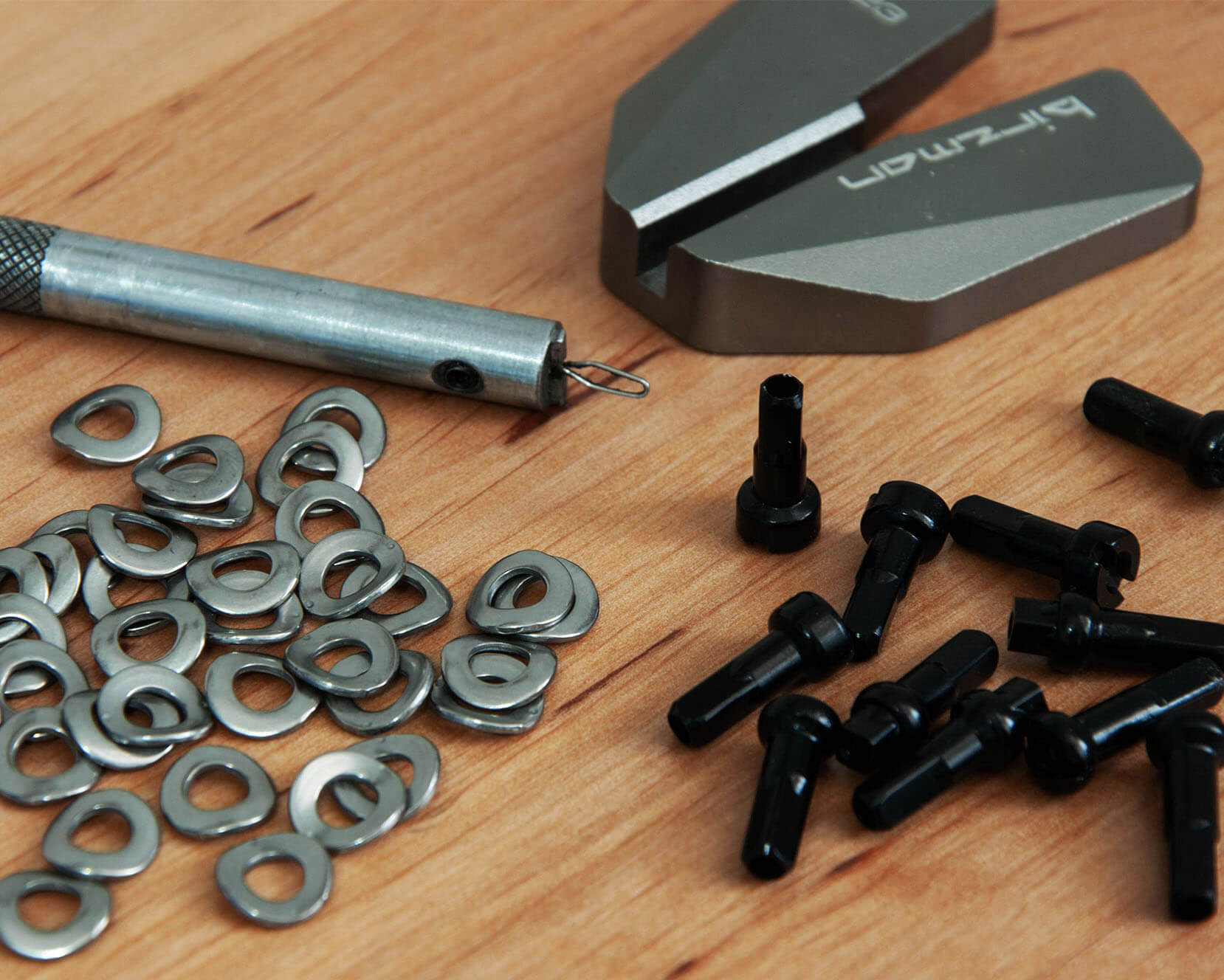
After rebuilding that wheel several times, I clearly remember how it completely changed my understanding of the importance of spoke tension in overall wheel dynamics. That single project reshaped the way I looked at balance and load distribution and why you just cannot trust a wheel that looks true on the outside. Soon after, I borrowed some money to properly kick-start my passion and began offering hand-built wheels to local cyclists.
Back then, however, access to high-quality information was limited. There were far fewer reliable sources to learn from. You either learned quickly — or you paid the price later through additional servicing, corrections, and time-consuming after-sales adjustments. That alone triggered the creation of the SpokeCalc platform for wheel builders.
You are the creator of Spokecalc. Why did you decide to develop such a calculator?
Interestingly, SpokeCalc initially started as a web design and coding challenge. My goal was simple - improve the behavior and visual experience of the spoke calculators that were already available online.
What’s surprising is that many calculators today still look and function almost exactly as they did years ago when I first started building wheels.
Having completed a few web design projects before that, I already had a clear idea of how a spoke calculator could become more user-friendly while also offering cleaner, more intuitive graphics. But design alone wasn’t the real motivation.
What truly bothered me were the hidden assumptions and inconsistencies in the calculation logic. Different calculators often produced different spoke lengths for the same inputs! And very few explained why.
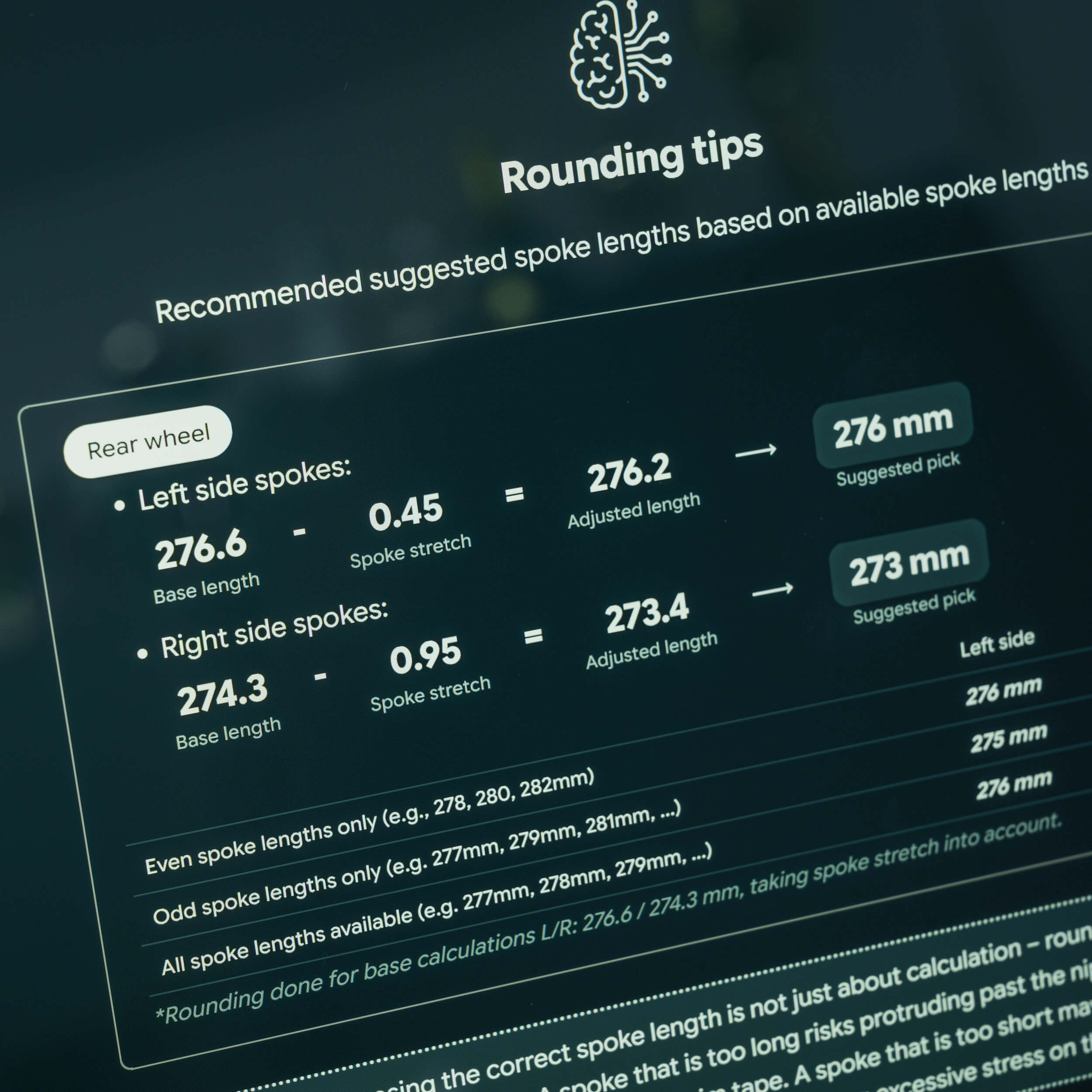
I strongly believe that if a builder wants to truly master spoke calculations, which are a critical factor in achieving a high-quality build, they must understand the engine behind the calculator. In simple terms, what data is actually required? How should it be measured correctly and efficiently? And how should the results be interpreted, including their practical consequences?
SpokeCalc was built around that philosophy, not just to output a number, but to make the logic transparent and educational.
In recent months, Spokecalc has received major updates, and the software now incorporates the concept of NSD. Can you explain the revolution this represents?
Beyond updating the graphics and improving the overall user interface, one of the most important technical advancements was the introduction of Nipple Seat Diameter (NSD) as a dedicated input parameter to support the traditional Effective Rim Diameter (ERD) concept.
A brief clarification for newer builders: Effective Rim Diameter (ERD) represents the diameter at which the end of the spoke actually sits inside the nipple. It has long been the standard reference for spoke length calculation — yet it is often handled with surprisingly little care. The fact is, as a derived rim dimension, ERD is inherently dependent on spoke nipple geometry. That dependency is rarely made explicit.
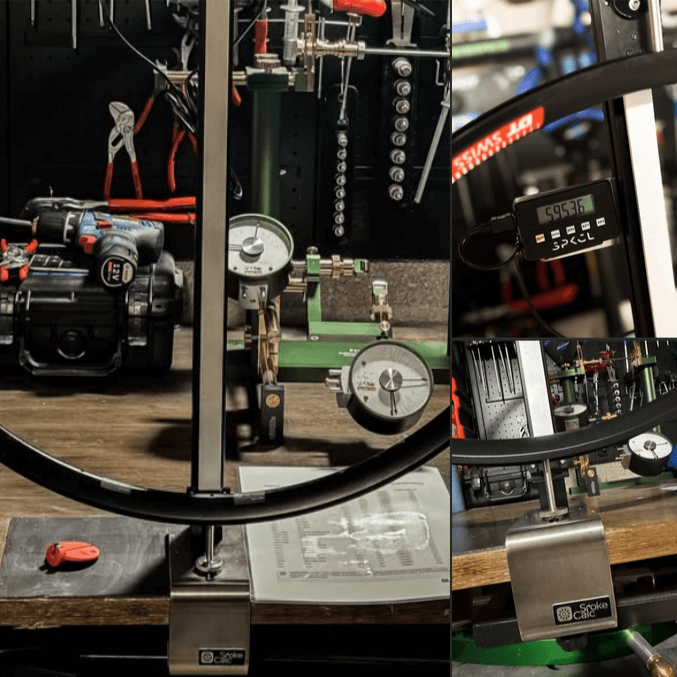
Nipple Seat Diameter (NSD), on the other hand, defines the actual geometric interface where the nipple head contacts the rim bed. It is therefore a pure rim geometric reference, independent of the nipple being used.
Although NSD is not directly used inside the spoke calculator engine itself, it reshapes the builder’s perspective on modern nipple geometries and their influence on spoke positioning. Swapping nipple types does change the effective spoke ending inside the rim. And more importantly, it affects calculations.
The real value of storing NSD for rims you work with lies in its repeatability. It is clearly defined and measurable, making it far less open to interpretation compared to the often confusing handling of ERD.
Yet, the concept of NSD is incomplete without knowing how far a spoke protrudes past the nipple bed line in case of different spoke nipples shape. And here my latest research comes to play.
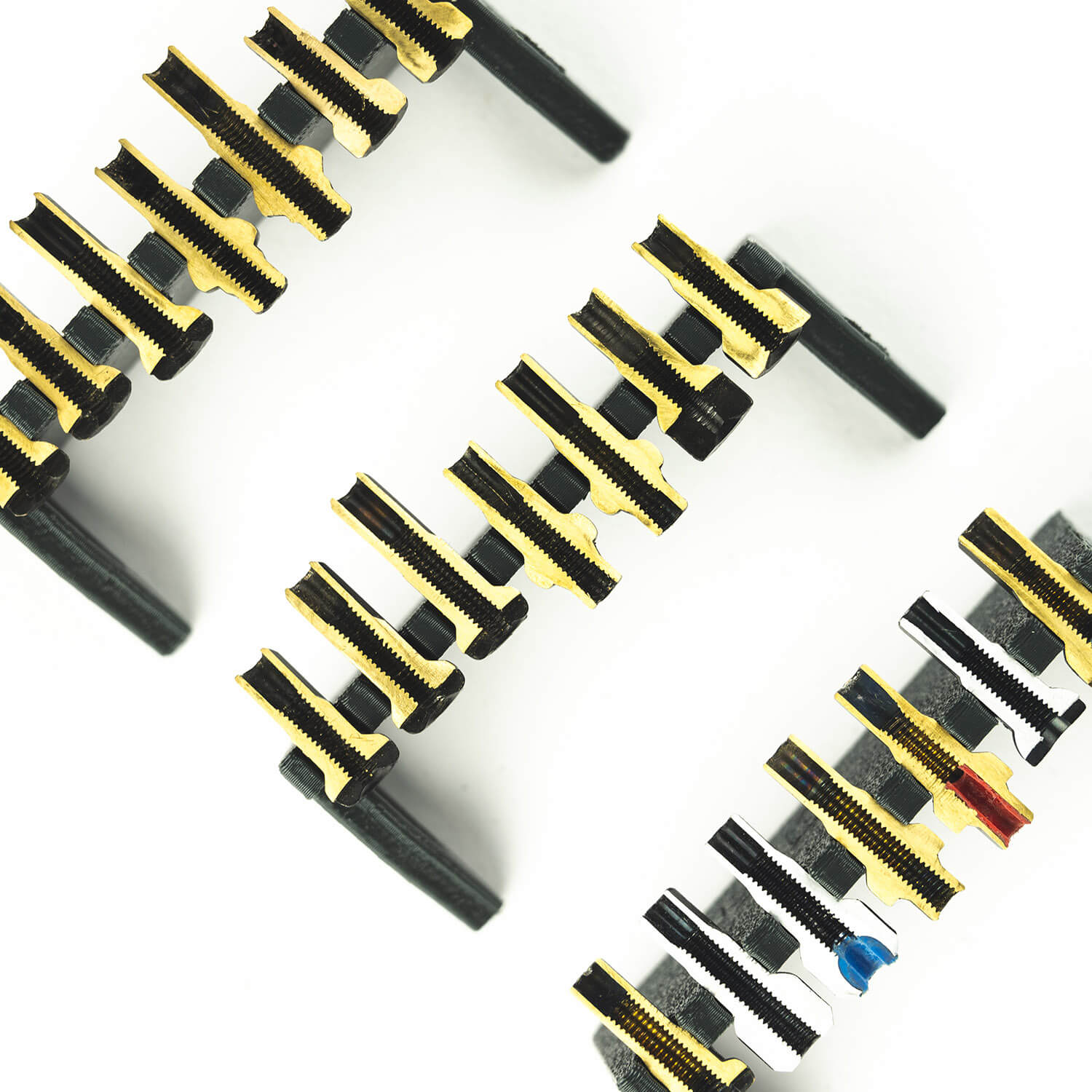
In a recent comprehensive spoke nipple thread & geometry analysis using real measurements of spoke nipple cross sections across major brands, builders were given actual NSD ‘addons’.
This alone completely transforms the conventional perspective we had on spoke positioning for accurate spoke lengths.
In one of my latest articles on Nipple Seat Diameter, I dive deep into the subject of spoke nipple geometry and how it effectively impacts ideal spoke positioning. Read it here: Why ERD never told the whole story
In your opinion, what major developments are coming to the world of wheelbuilding?
As wheel builders, we are currently in the middle of significant changes. Materials, techniques, and trends are evolving on a daily basis. Just when you feel you’ve mastered it, polymer, carbon fibre spokes, or an ultra-light carbon rim series enter the market. Demanding even greater precision and attention to detail.
And then there are areas many builders once considered solved, such as deep-head spoke nipples and evolving rim bed geometries. These developments challenge long-standing assumptions about how we measure rim dimensions and calculate spoke length. Conventional methods are being questioned, and as we see in the case of the ERD-NSD relation, being completely redefined.
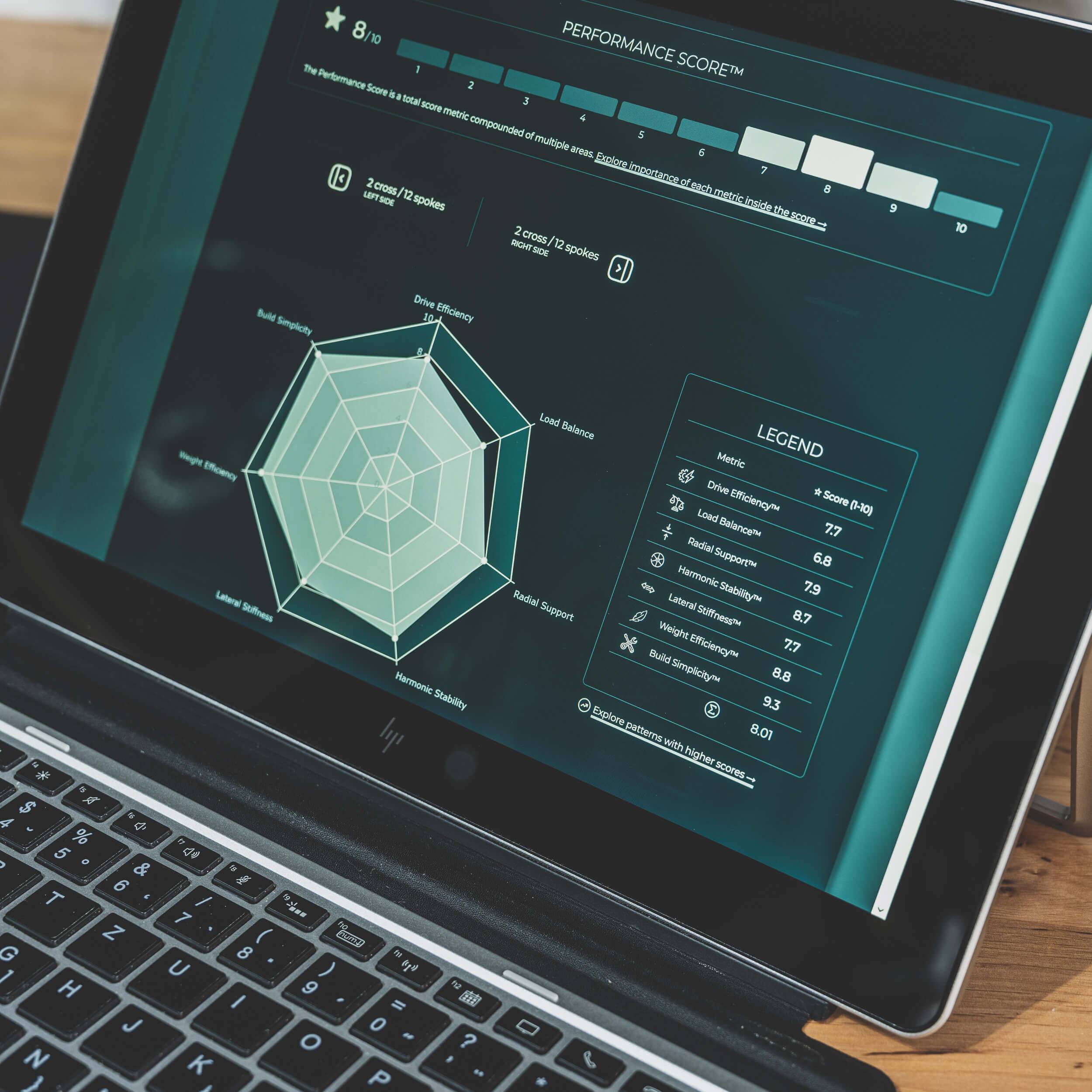
From my perspective as a builder and educator, this is exactly why I focus my work on problem-solving and critical thinking rather than routine-based instructions. The future wheel builder will not succeed by simply repeating established processes. They will need to understand principles, adapt quickly, and think structurally.
At the same time, based on my recent experience working with various manufacturers, there is also a strong movement toward large-scale, efficient production. A bit counterintuitive, yet more and more tools with this aim in mind are being developed to support semi- to fully automated building processes.
Having said that, I still believe wheel building as artisanery will not diminish as there are advantages to what we do by hand compared to machine-based processes!
Sapim has completely redesigned its public spoke calculator, now displaying the mention “powered by Spokecalc.” Without revealing any secrets, how did this collaboration with a major player in the wheel industry come about?
Sapim — SpokeCalc collaboration was a great learning experience for both sides. It began with their clear intention to modernize the online experience for their website visitors, including updating their existing spoke calculator. This was never about competing over who had the “better” calculator — they already had a functional solution in place. Rather, it became a shared effort to rethink how the entire spoke calculation process could feel more intuitive, transparent, and educational.
During our initial discussions, it quickly became evident that the real opportunity was not just redesigning an interface, but improving the user journey. We focused on enhancing clarity throughout the calculation process, helping builders better understand what they are inputting, why it matters, and how to interpret the results.
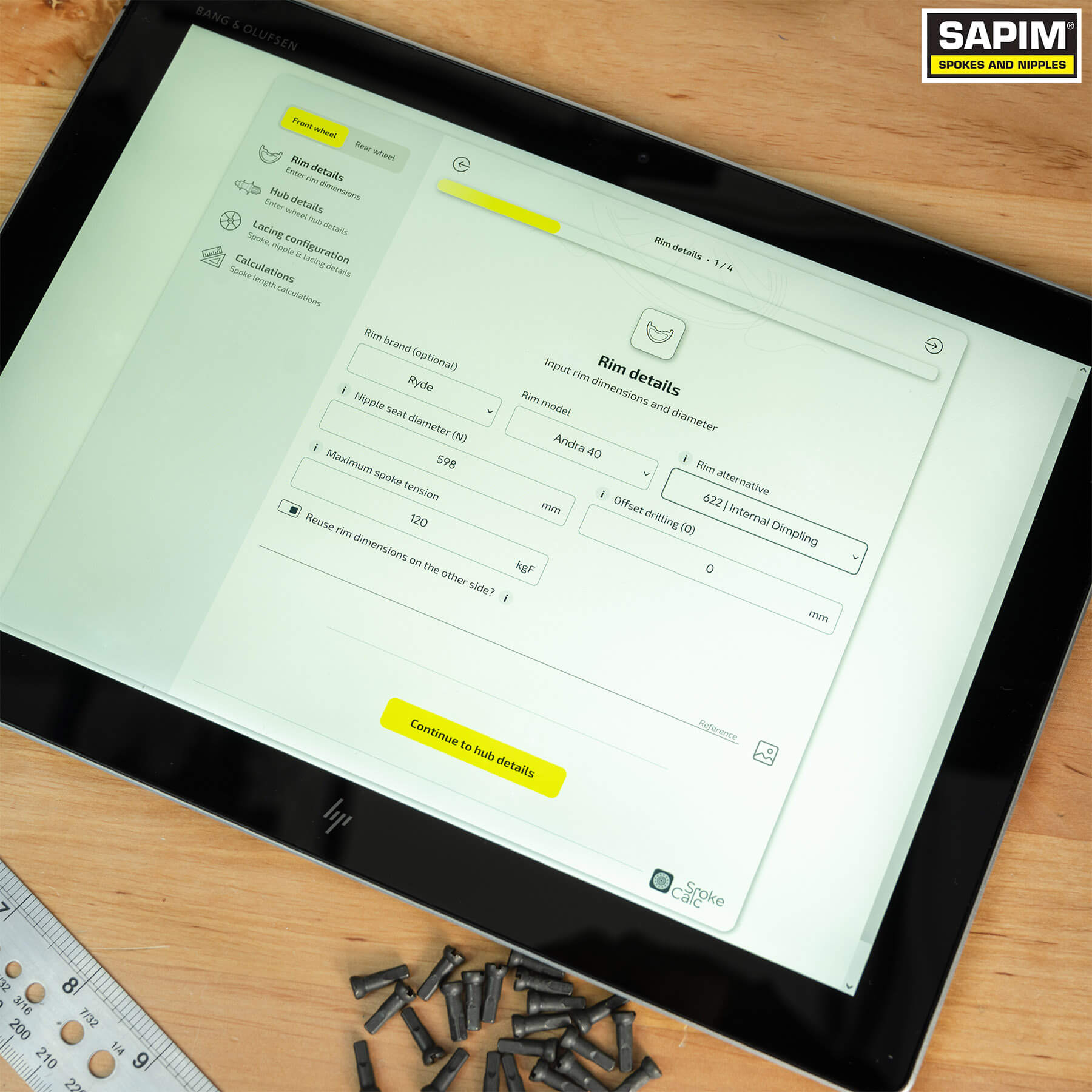
We added interactive measuring tools, clearer rounding guidance, and integrated spoke and nipple data. And above all, introducing the Nipple Seat Diameter (NSD) to the calculation process. All in all, the idea was to keep it accurate while making the whole process easier to understand.
In the end, the collaboration was built on a shared understanding: when the industry evolves, the tools supporting it should evolve as well.
Finally, what advice would you give to any mechanic who wants to improve their wheelbuilding skills?
Master the fundamentals first. Learn basics and established practices that can be spread across a multitude of builds, and only then start acquiring material specific techniques or following new trends.
Keep detailed records of your builds. Observe your wheels throughout their lifespan to get feedback on what actually works.
Don’t rush the process as speed comes naturally. Do not try to speed up the process before you get a good grip of the process that actually results in a quality wheel and can be refined.
Of course, going through that learning curve, you will most likely identify your challenges with my blog articles’ topics since all of us eventually make the same mistakes!
See you online in communities like Le Roue Artisanale, where actual insights can be shared instantaneously!
Enjoyed this article?
Buy me a coffee to support my work!
Every coffee helps fuel more content like this!
FINAL THOUGHTS
One topic that keeps coming back is rim dimensions dependencies. Especially the relationship between ERD and Nipple Seat Diameter (NSD). I’ve been working on a deeper, more practical breakdown of this subject, including measurement tools and interactive models. More soon.
Enjoy wheel building.
About author

Aljaž Trenta
Author and founder"As a cycling enthusiast, bike mechanic and self-taught web designer, combining several of my passions and skills to build SpokeCalc was a great fun for me."