Having covered the basic technical properties, material peculiarities and handling requirements of carbon spokes during wheel assembly and tensioning, it is now time to focus our attention on mastering spoke calculations for such setups.
If you haven't already, I would also recommend reading my previous article, Practical Guide to Carbon Spokes, where I covered a range of tricks and tips around carbon-spoke wheel builds.
Since publishing that article, however, the SpokeCalc calculator has received several updates specifically aimed at accommodating these types of calculations, so I thought it was time to revisit the subject and take a closer look at the process using real-world components as an example. To finish it off, it is also shown how the same process can be handled using much simpler and free spokecalc.io for all the readers that are not active users of the app.
So, whether you're planning your first carbon spoke wheelset or adding another wheel configuration to your workshop, the aim is simple. Get the measurements right, understand the results, and avoid costly ordering mistakes.
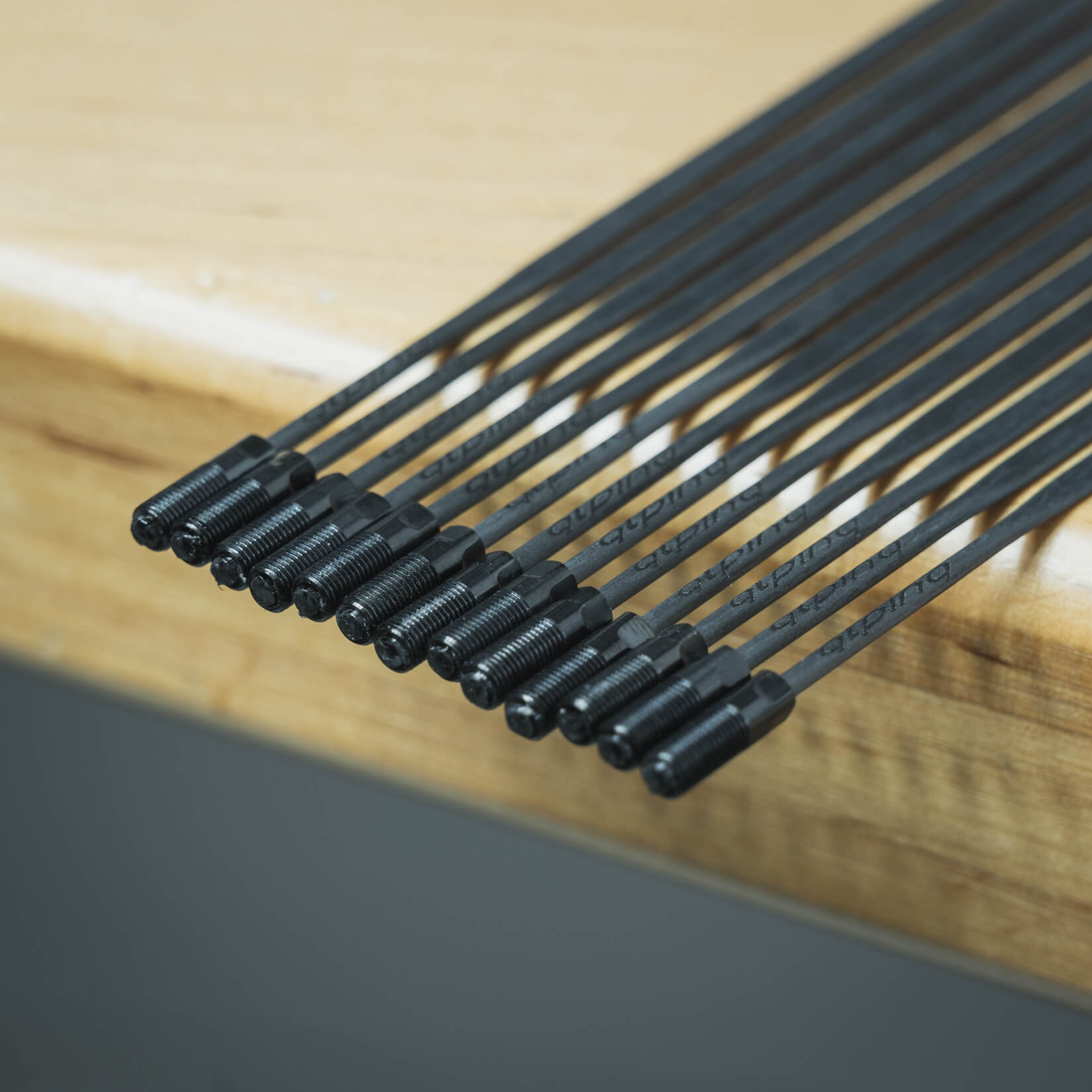
Table of contents
- About carbon-spoke calculations
- Real-world spoke calculation
- Make it simple using the free spokecalc.io
- Final thoughts
About carbon-spoke calculations
Through daily contact with the industry's leading wheel builders and by tracking their latest projects on social media, one trend becomes impossible to ignore. Newer materials are rapidly dominating modern wheel building, with carbon spokes gaining traction in road category builds, while textile spokes have found en edge in the off-road segment.
Because they are still quite novel, it’s understandable why carbon spokes cause some unease for many wheel builders expecting to use them for the first time. Their unique material properties mean they require special care during assembly, as well as the right knowledge to get the correct spoke length.
Unfortunately, some wheel projects end before they even begin in the first place, with the wrong spoke calculation, unusable spoke batch, and a costly mistake as a reminder. So where does the maths usually go wrong?
It appears calculating carbon spoke lengths is not always as straightforward as it might seem. Unlike conventional stainless-steel spokes, the latest generation of carbon alternatives feature proprietary attachment systems that require extra attention.
Working with carbon spokes also inevitably means entering the territory of the straight pull wheel configurations, bringing a different set of hub geometry considerations into the spoke length calculation. And that alone turns many novices or old-fashioned builders away.
In contrast to traditional stainless-steel spokes, checking the spoke maker's technical data documents becomes almost absolutely necessary to verify all the details. The main reason is that manufacturers use inconsistent length conventions and reference points.
This alone suggests that results from the spoke calculator do not necessarily perfectly match the length you actually need to order. To make matters worse, a carbon spoke length from one supplier does not equal the same length when buying a similar spoke from another. Understanding how a manufacturer defines spoke length is just as important as calculating the correct geometric length. And it is crucial before committing to a spoke selection.
Let's now look at the areas where builders ought to pay special attention when running carbon-spoke wheel calculations.
Carbon spoke length: the important detail
Again, calculated geometric length isn't necessarily the manufacturer's specified length since not every carbon spoke system follows the same convention. This is one of the most common areas where wheel builders get it wrong, often due to misinformation or simply overlooking manufacturer-specific requirements.
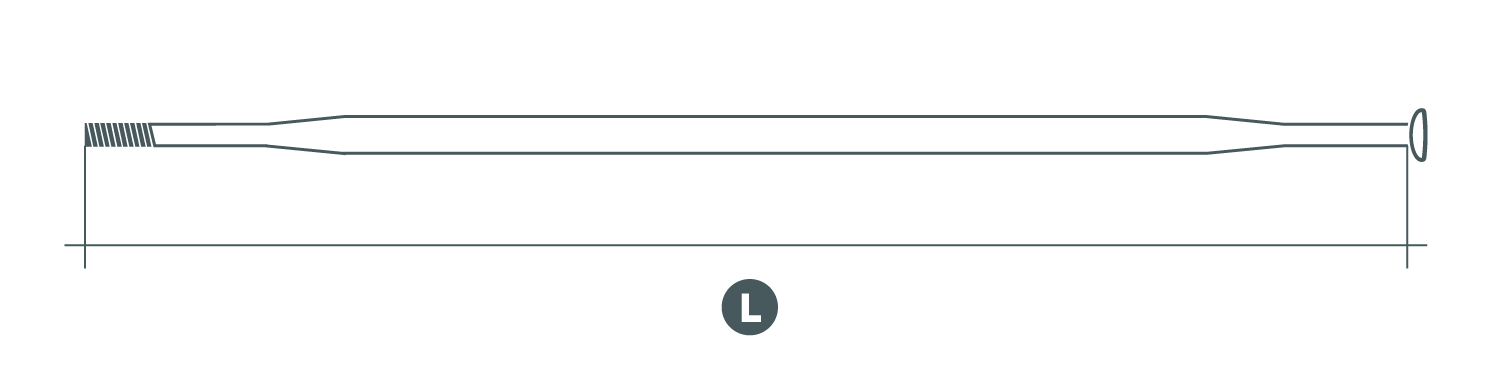
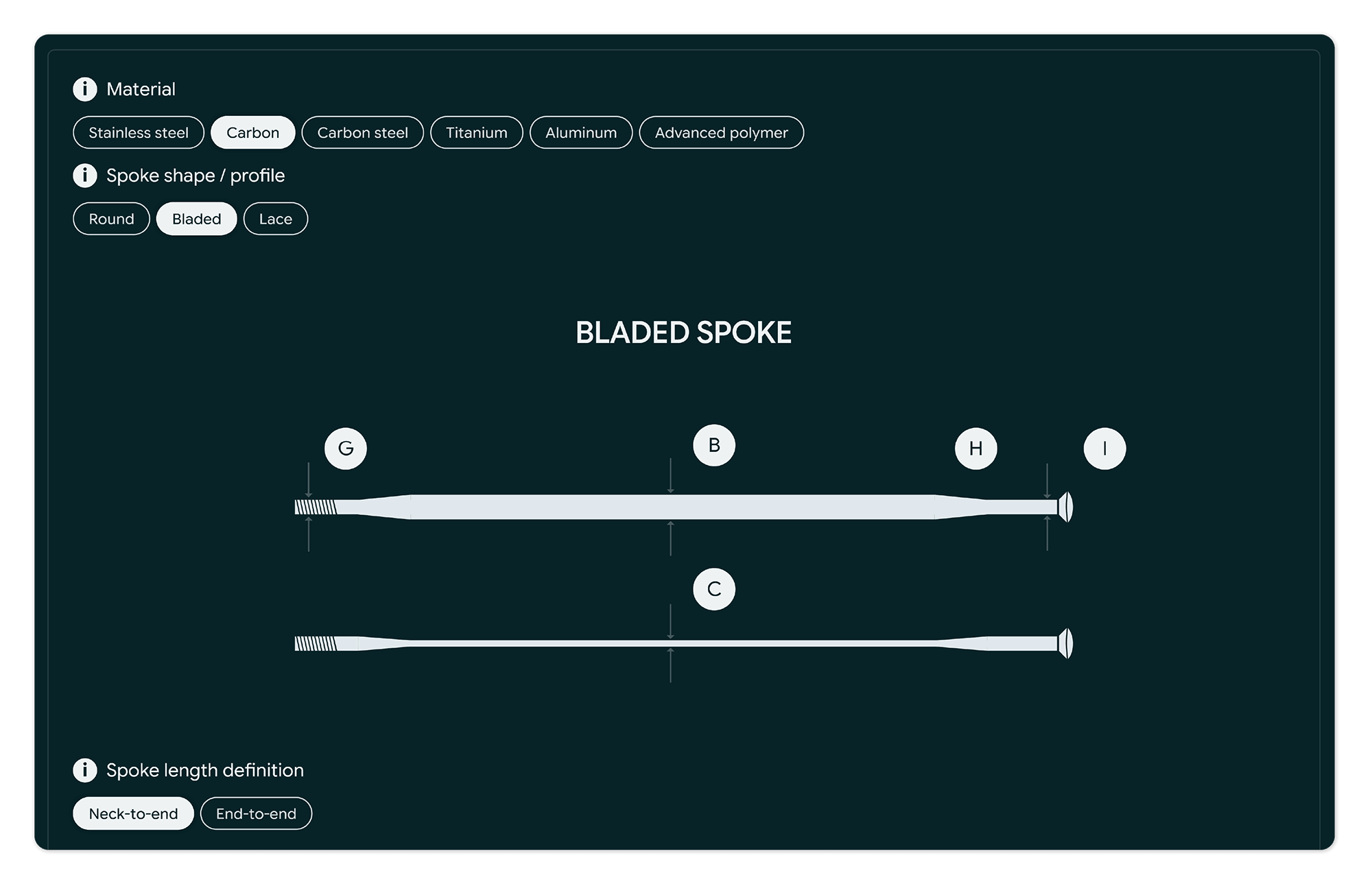
NOTE: Having selected the straight pull calculation type, the majority of spoke calculators by default output the length of a spoke from the end of the threads up to its neck, which is its seating point inside the hub flange while excluding the spoke head.
In most cases, the manufacturer’s specified length is aligned with traditional stainless steel spokes, where spokes are measured up to the neck, excluding the spoke head. That alone simplifies the calculation and interpretation of its results a lot.
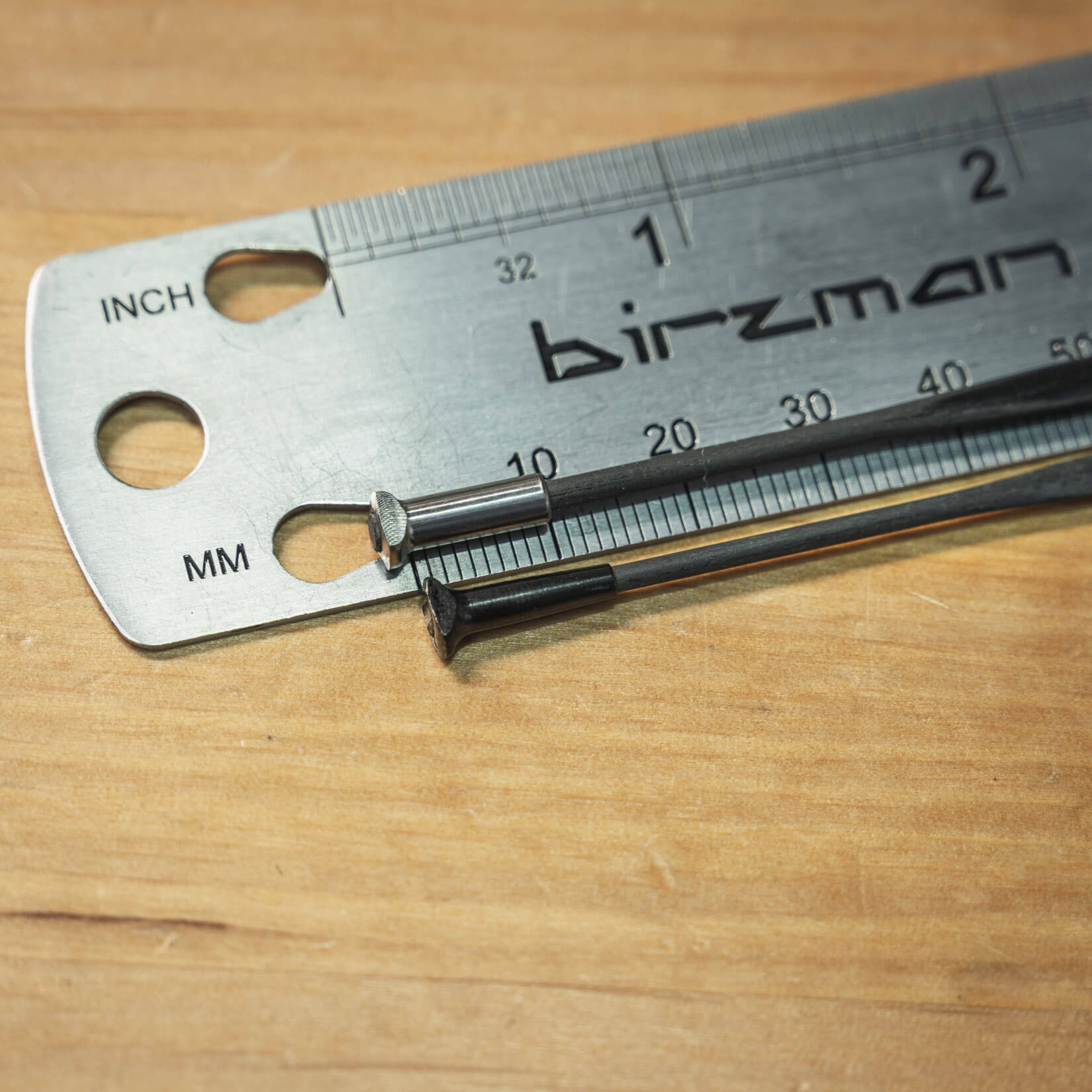
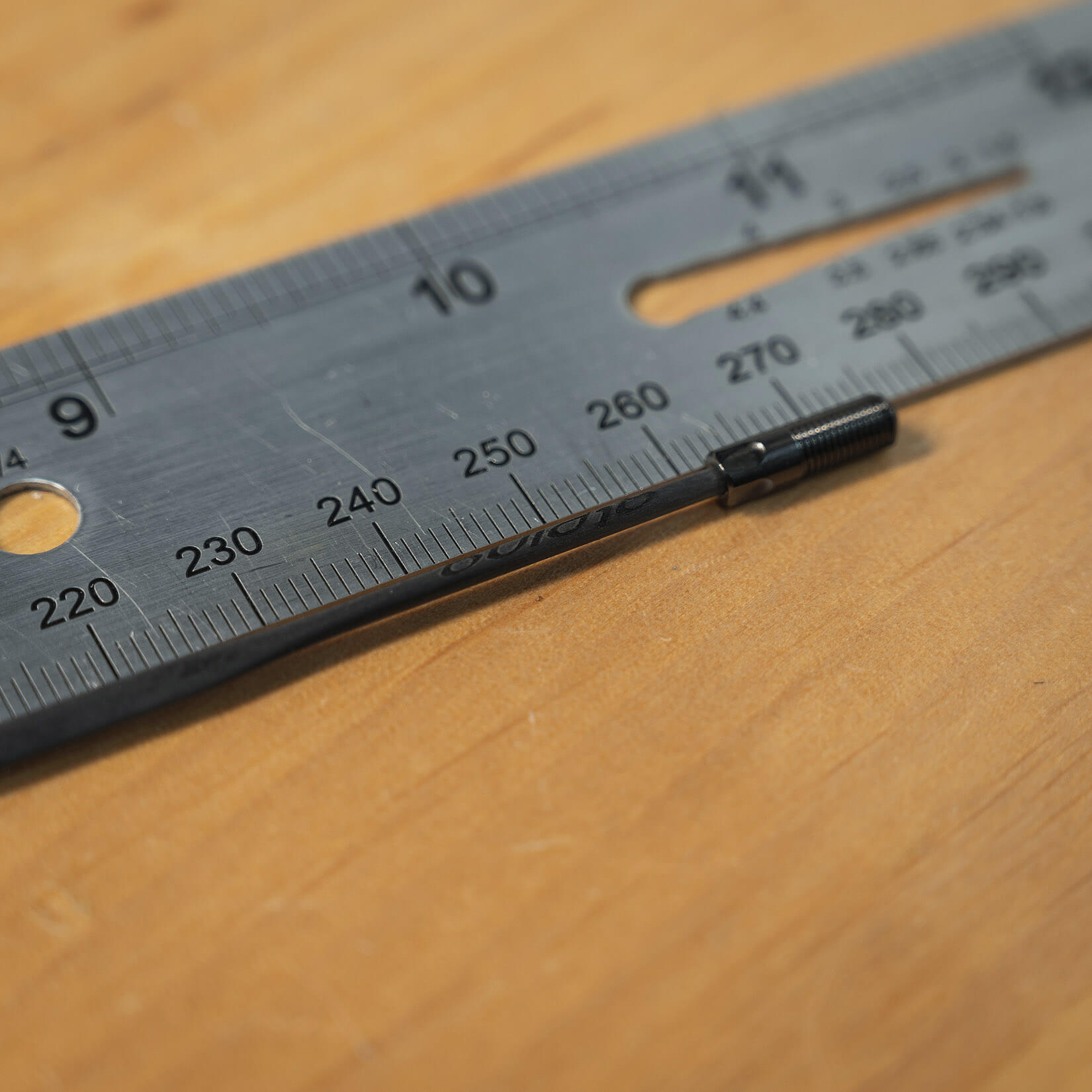
Since the difference in the spoke length, including or excluding head thickness, easily exceeds 2 mm, failing to take into account how the manufacturer specified the length will most certainly generate unusable lengths. Therefore, it is worth double checking with the supplier or pay a visit to technical documentation of the spoke prior to ordering required lengths.
Another caveat associated with spoke length is the tolerance that manufacturers allow around the nominal length. In practice, tolerances can extend up to ±0.5 mm, meaning that a batch ordered as 280 mm may contain spokes measuring slightly below or above that nominal value. These differences might come as a surprise to first-time users, especially when placing spokes next to each other for comparison, or if facing some degree of uneven thread insert positions at the rim after finalizing the wheel. Get the rounding done poorly on top of that, and these small differences can quickly stack up and punish you during assembly.
Rim dimensions & requirements
Moving on to the rim-related requirements, this is probably the second most common area where builders get things wrong. Since carbon-spoke wheels are typically built with internal nipples, defining where the spoke actually ends inside the rim becomes closely related to the amount of available spoke thread and available spoke nipple length.
Following the rim manufacturer's recommended ERD (Effective Rim Diameter) can therefore be misleading. The same rim model may be available or designed to be built using traditional stainless steel spokes with external nipples, while the carbon-spoke configuration uses an internal nipple.
Even when you can obtain the ERD from the rim supplier, it is rare to find precise information about how much spoke protrusion beyond the nipple seat was included in that dimension. From my experience, asking the supplier for the rim ERD and you will more often than not, sadly, collect false data.

This is why I consider the Nipple Seat Diameter (NSD) to be the most reliable rim measurement for carbon-spoke calculations. It defines the actual diameter at the point where the nipple sits and, consequently, provides a much clearer reference for determining the spoke termination point inside the rim. But more importantly, it is a pure geometric rim dimension which builders can save for future reference regardless of the spoke system used.
Effective rim diameter = Nipple seat diameter + 2 * NSD add-on
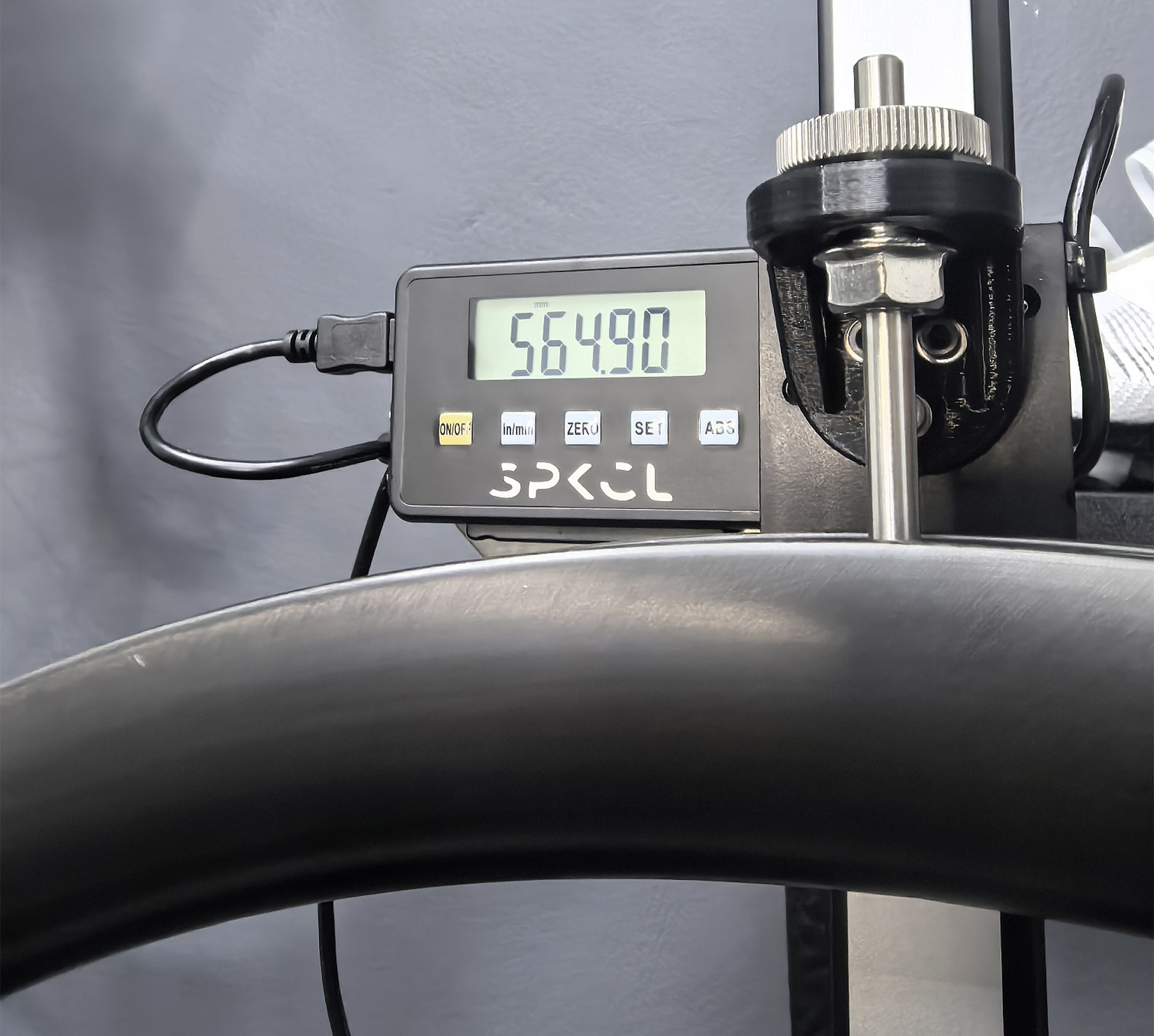
Being aware of the drawbacks of conventional Effective Rim Diameter, the digital ERD & NSD measuring tool was introduced and quickly accepted amongst wheel builders since it allows measuring the Nipple Seat Diameter as well. Find more information on its product page, here.
For a more detailed explanation of why this dimension is steadily gaining importance over traditional ERD, see my article Nipple Seat Diameter: Why ERD Was Never the Whole Story. In the coming months, a second article on this topic, with a more practical focus, is planned, so please stay tuned.
And then there is another variable to consider. Carbon spoke thread lengths vary between manufacturers, which can result in noticeably different termination points inside the rim. This is where knowing the rim's Nipple Seat Diameter really proves of worth.
In this situation, the NSD adjustment depends largely on the thread length of the metal insert in the carbon spoke. Or, more precisely, on the length of the hexagonal internal nipple selected by the builder.
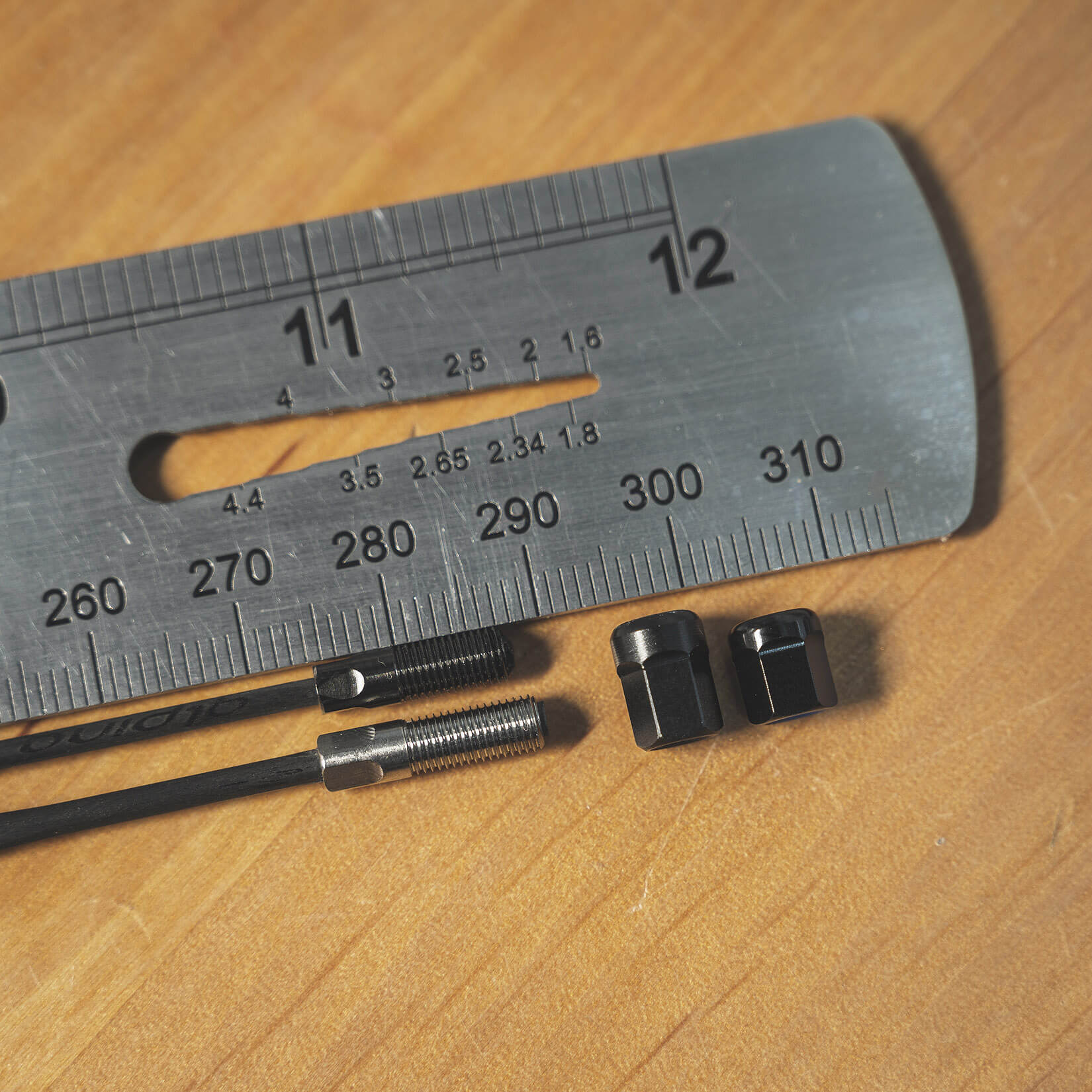
The photo above shows just how much these dimensions can vary between two different spoke combinations. In this example, the threaded sections are specified at 7.4 mm and 9.5 mm, while the corresponding internal nipples measure approximately 7 mm and 8.7 mm. Even though both systems serve the same basic purpose, their available thread and nipple dimensions create noticeably different reference points for the final spoke termination and engagement requirements.
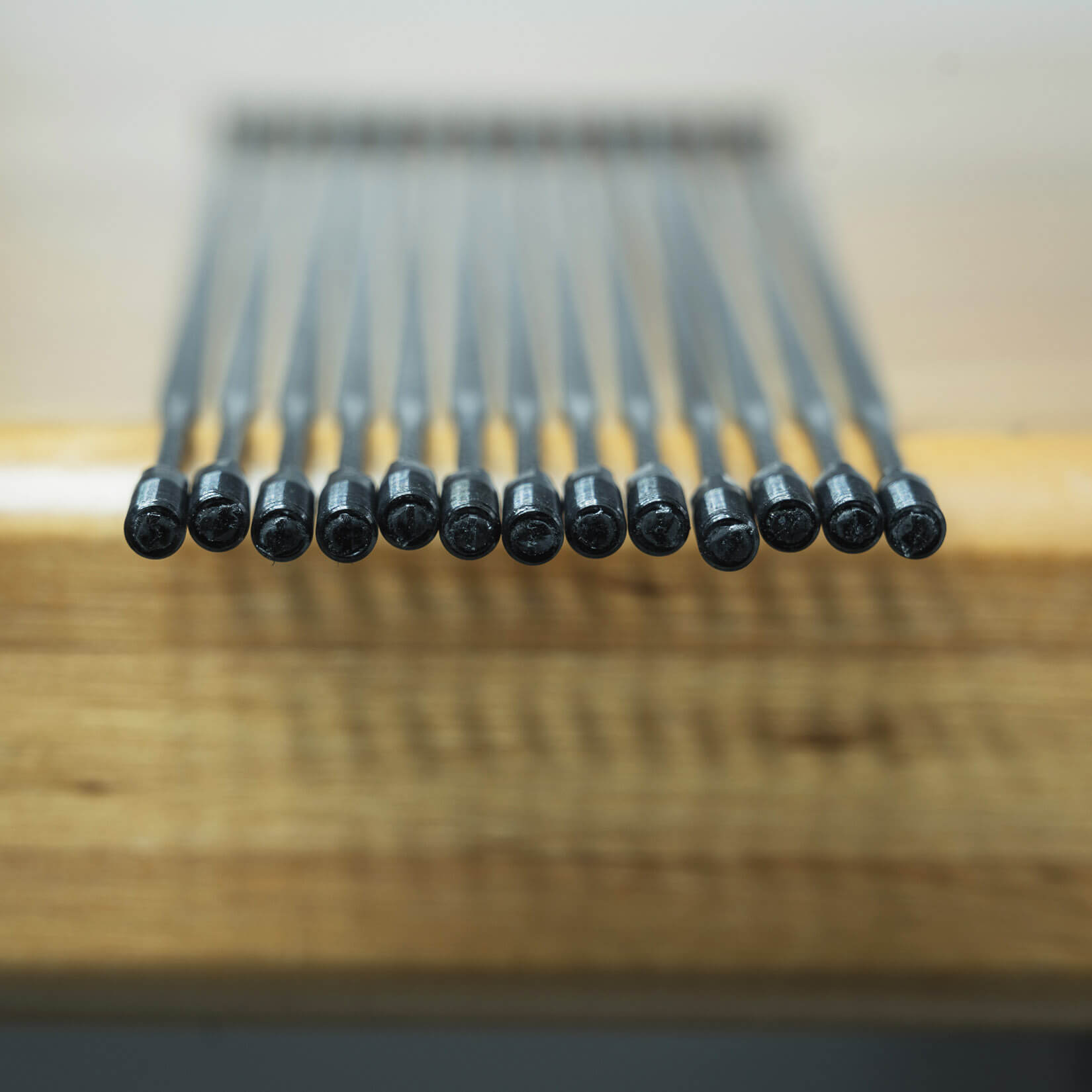
The Alpina Carbolite spoke provides another good example of why this matters. Its metal insert is comparatively short, leaving less room for potential miscalculations. With less available thread to cushion the inaccurate spoke calculation or rounding errors, getting the initial geometry and the manufacturer's measurement convention right becomes even more important. Especially since carbon spoke nipples are not threaded from the very beginning, leaving even less available thread inside the nipple.
This just proves that wheel builders cannot simply swap one carbon spoke model for another without carefully checking the technical specs and modifying the calculation results. And at the same time seriously undermines the ERD concept.
Oversized hub geometry
For the latest generation of carbon spokes with oversized attachment inserts, hub geometry introduces another level of complexity.
In my experience, the oversized flange geometry of these hubs is what tends to confuse builders a lot. The difficulty is not necessarily finding the technical specifications, but determining which dimensions can actually be used for the calculation.
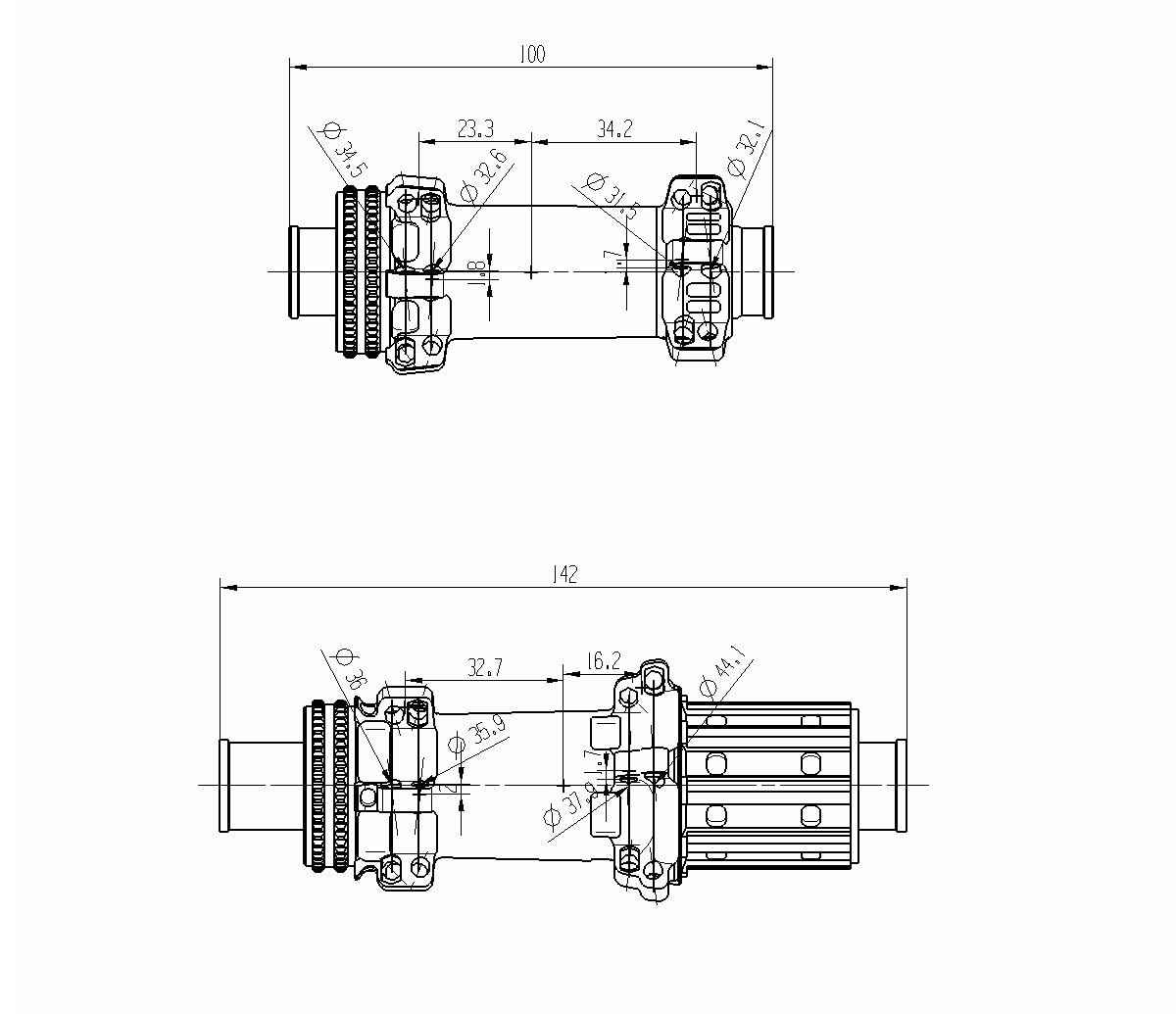
As it appears, oversized stainless-steel or titanium head inserts are forcing hub manufacturers to design wider flange ears to allow opposing spokes to sit parallel, similar to conventional straight-pull hubs. Consequently, we are left with four distinctive flange flange-to-center distances corresponding to each row of spokes.
Naturally, wheel builders start asking themselves if more than just two lengths per wheel are possible.
Note: The majority of hubs' technical specs publish only one flange-to-center distance per wheel drive, to facilitate simplified calculations.
In my previous article, Practical Guide to Carbon Spokes, I already looked in detail at whether four different spoke lengths—one for each spoke row—are actually necessary, and what the real differences in length are.
For example, measurements from the Gen3 Plus rear hub from Light Bicycle showed a difference of just 0.7 mm on the non-drive side and 0.3 mm on the drive side. Getting those numbers required repeatedly performing the same calculation while changing only the effective flange-to-center distance, which is rather impractical for everyday wheel building.
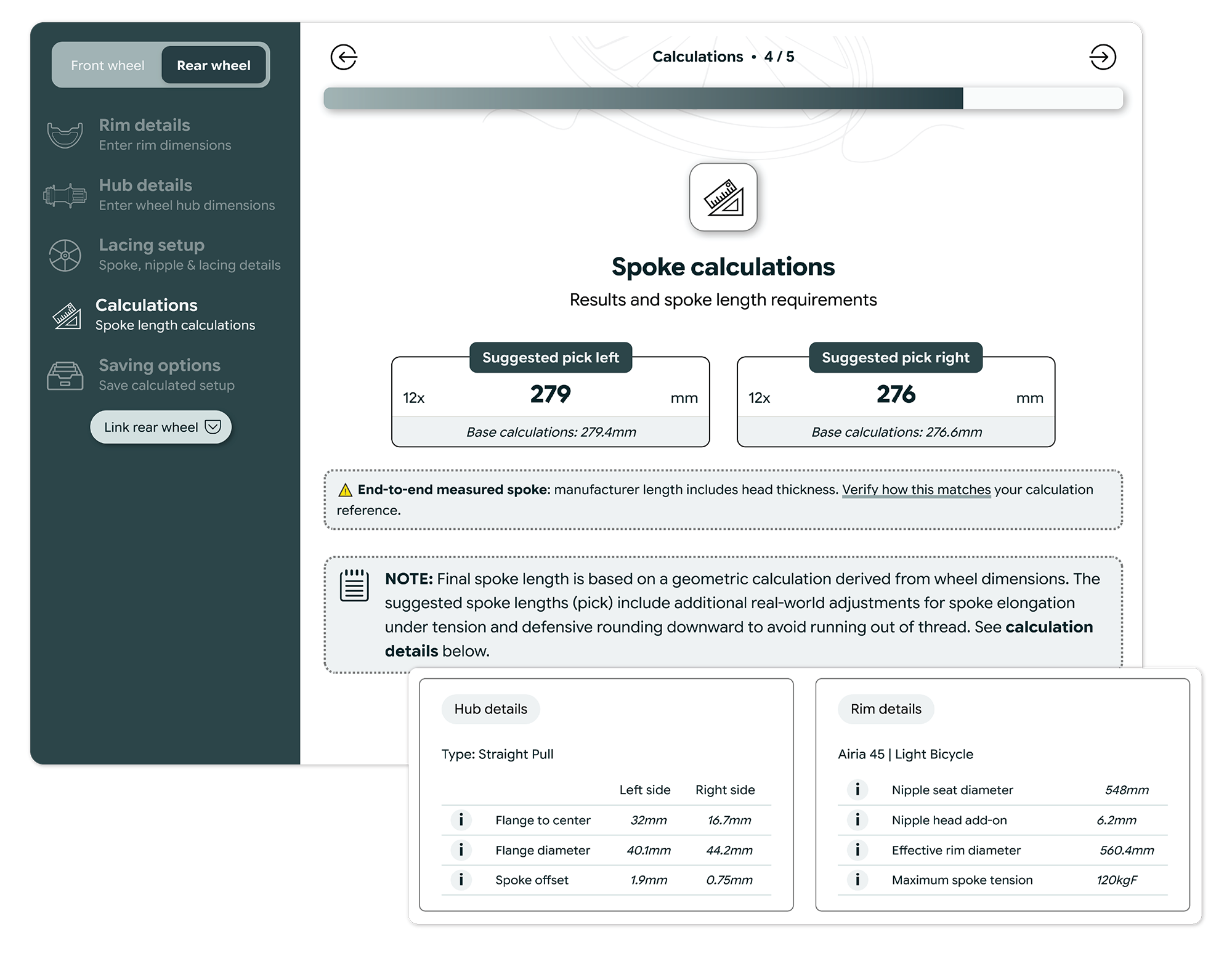
Since the technical specifications of most hubs publish only one flange-to-center distance per side rather than a detailed breakdown, SpokeCalc now provides additional insight into the effective spoke length for each spoke row below the main results, assuming spoke rows lie apart at about 6 mm. If a carbon spoke is selected, you can find this information inside the Details section under the main calculation results.
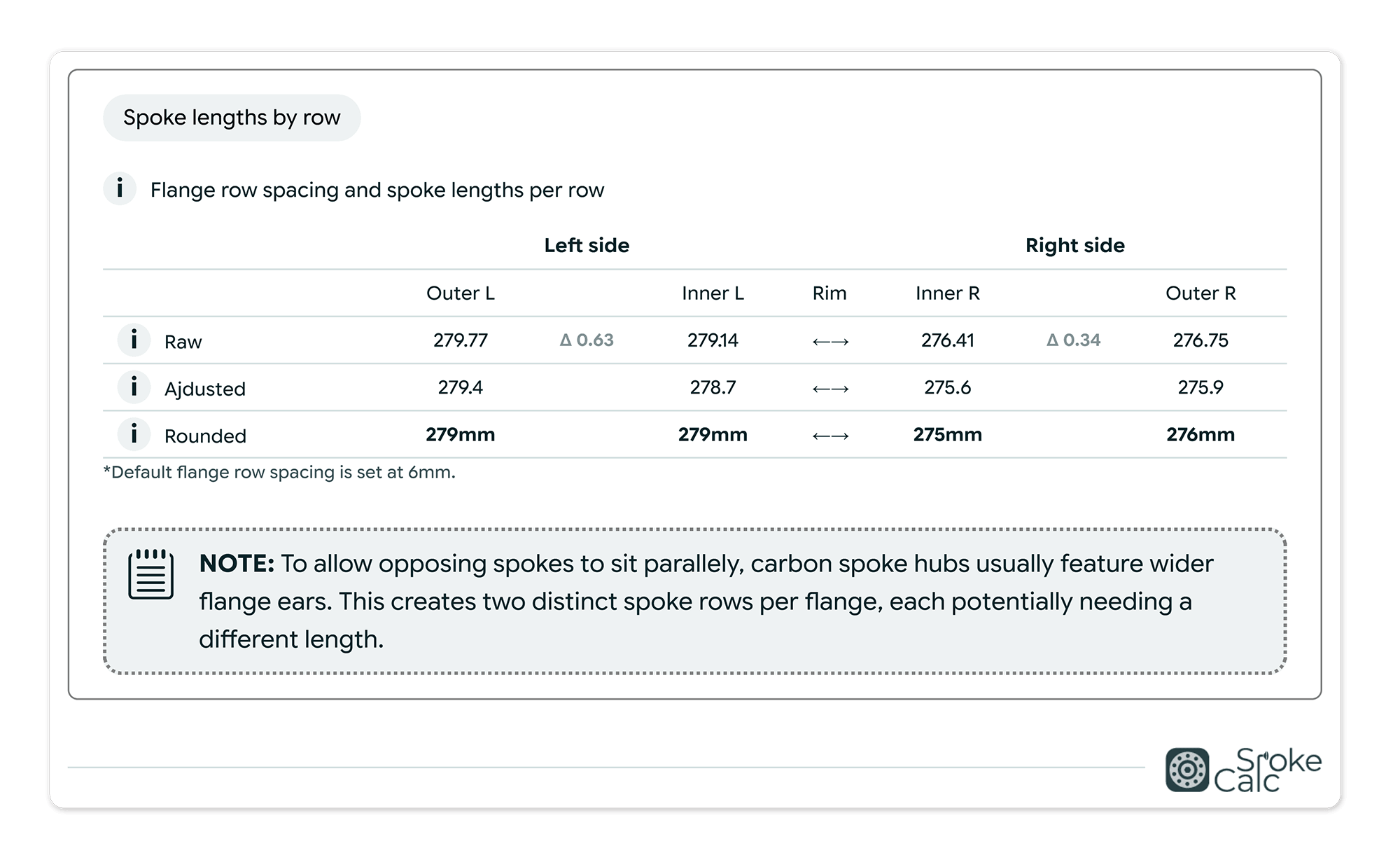
The purpose isn't to force the builder into ordering four different spoke lengths. Instead, it is to make these small differences visible and help in decision making when rounding and selecting the final spoke length.
In reality, there are two good reasons why I wouldn't suggest ordering multiple different lengths for each side of the wheel.
First, hub manufacturers are already aware of this issue. Small geometry decisions can be used to reduce the differences between opposing spoke rows. If you pay attention, you will notice some hub designs alternate pitch diameter (PCD) between rows on the same flange to, among others, compensate for the real difference in effective flange-to-center dimension.
As a result, those four different theoretical lengths are often reduced to only two practical lengths.
Second, there is a point where the difference simply isn't worth acting on. Based on my own real-world test build, I would only consider using a separate spoke length when the calculated difference between rows exceeds approximately 0.6 mm (e.g., the non-drive side of some rear wheels). Below that, the practical benefit is questionable, while introducing additional lengths can create another, more real problem where thread inserts at the rim become visibly uneven as a result of different spoke lengths.
In other words, in pursuit of optimizing spoke thread engagement, you might sacrifice the aesthetics of the wheel itself by not accepting a relatively small difference in calculated spoke length.
Real-world spoke calculation
The components & considerations
Equipped with tips and considerations discussed above, it is time to dive into a real-world example of a carbon-spoke wheel calculation. Intentionally, all steps of the process are shown in great detail, with three aspects requiring particular attention:
- Using the Nipple Seat Diameter (NSD) rather than relying on ERD
- Taking into account that Alpina Carbolite spoke length is specified by the manufacturer as an end-to-end measurement
- Using the available spoke thread length and respecting the nipple length to define the optimal spoke termination point inside the rim
Quick note: Initial spoke calculation will be made for spokes that follow conventional length definition (neck-to-end) and then revised to account for requirements regarding the Alpina Carbolite spoke.
For demonstration purposes, bike wheel components are as follow:
- Hubset: DT Swiss 180 DBCL carbon-spoke 24H
- Rim: Light Bicycle Airia 45mm
- Spoke: Alpina Carbolite 3.10 x 0.95mm
- Spoke nipple: Alpina Carbolite hex nipples, 7.00mm
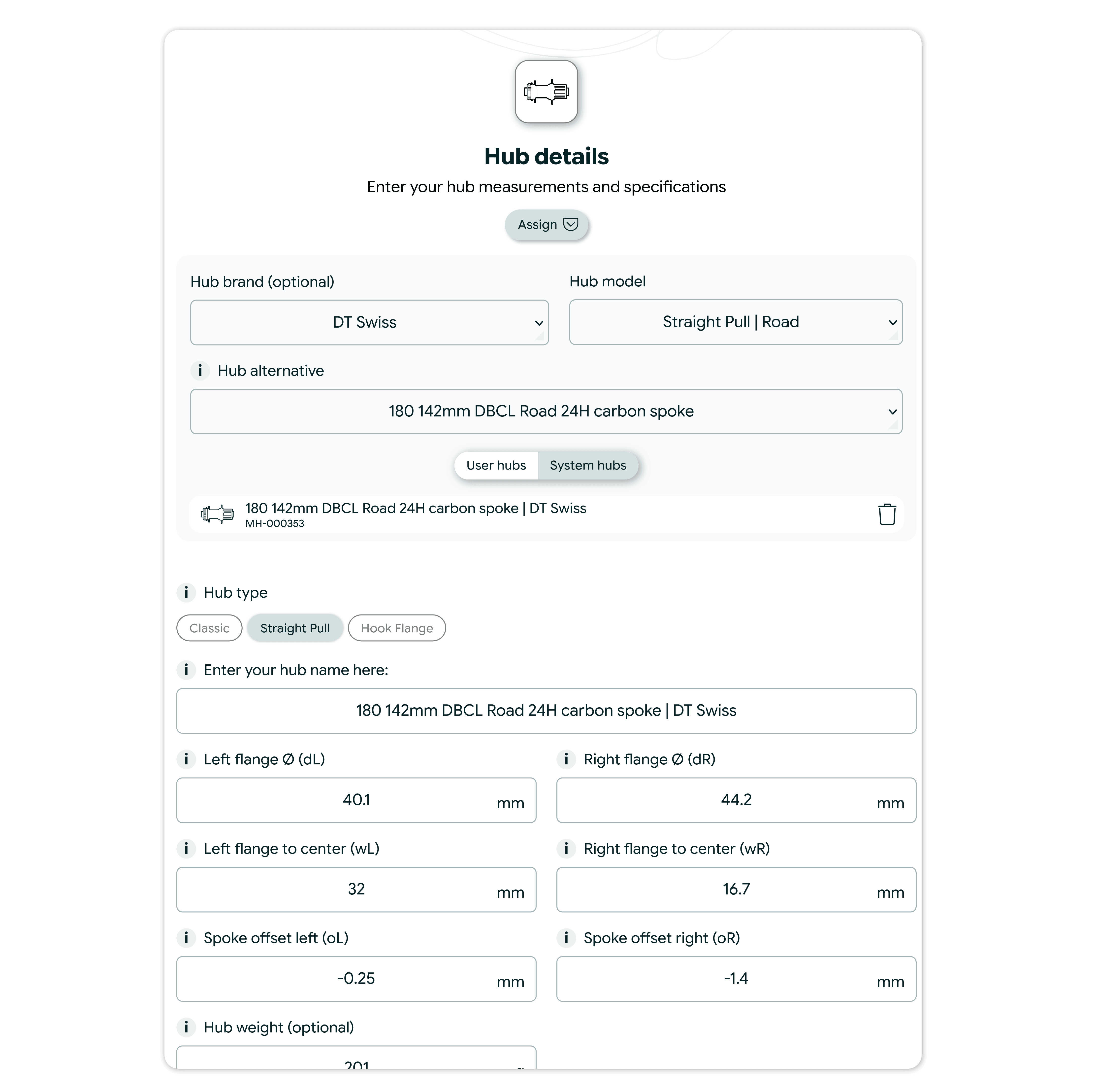
The DT Swiss 180 DBCL carbon-spoke hub pair is available in the SpokeCalc component library and can be imported directly into the spoke calculator. The hub is comes in a 24H configuration, with the lacing pattern set by default to 2-cross on both sides. One detail for those with good eyes: note how this hub features a negative spoke offset.
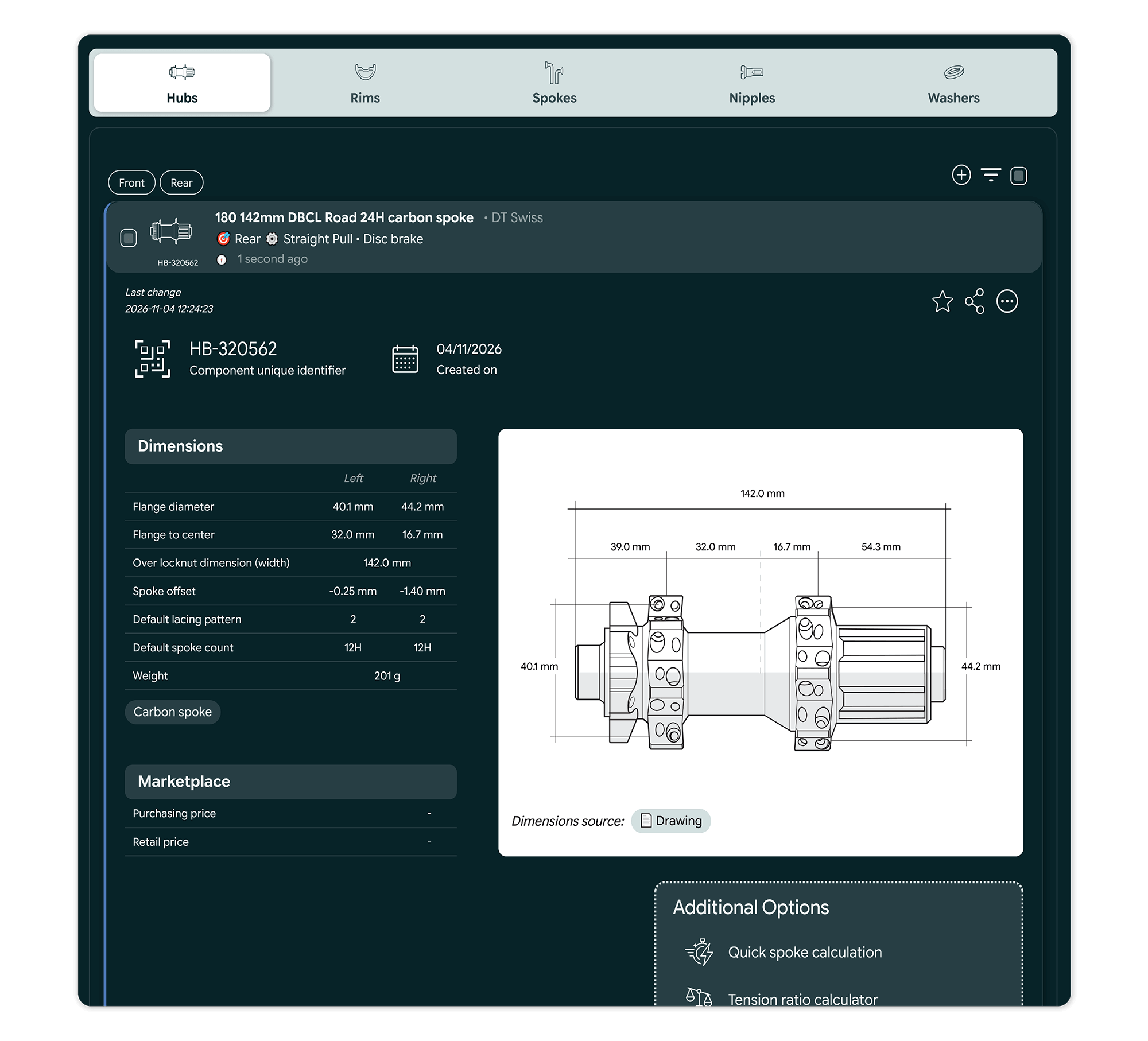
Let's import the hub into our spoke calculation canvas and take a closer look at how its measurements are used.
A note here regarding the spoke offsets, since we will be returning to this parameter. When working with hub data, spoke offsets are measured from the flange ear centerline and represent the spoke's seating reference point. Simplified, these offsets refer to the position where the spoke neck begins. This is the standard reference used for conventional stainless-steel spokes.
The same hub dimensions apply to most carbon spokes. With Alpina, however, its unconventional length definition makes things slightly different. But let's revisit this section later.
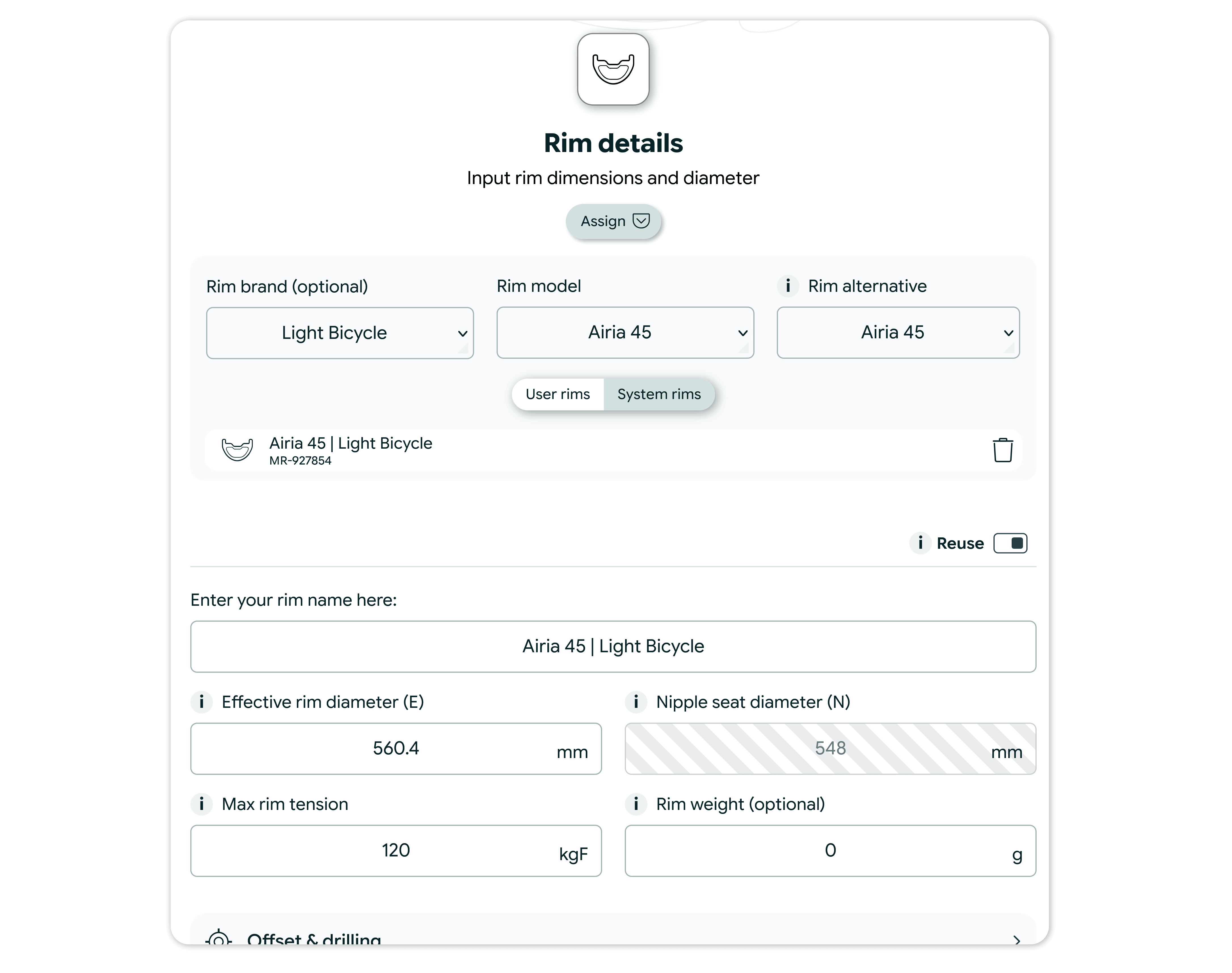
For this example, we'll use the Light Bicycle Airia 45 mm rim, which has a specified Nipple Seat Diameter of 548 mm. This gives us a verified geometric rim dimension and a reliable starting point for the calculation.
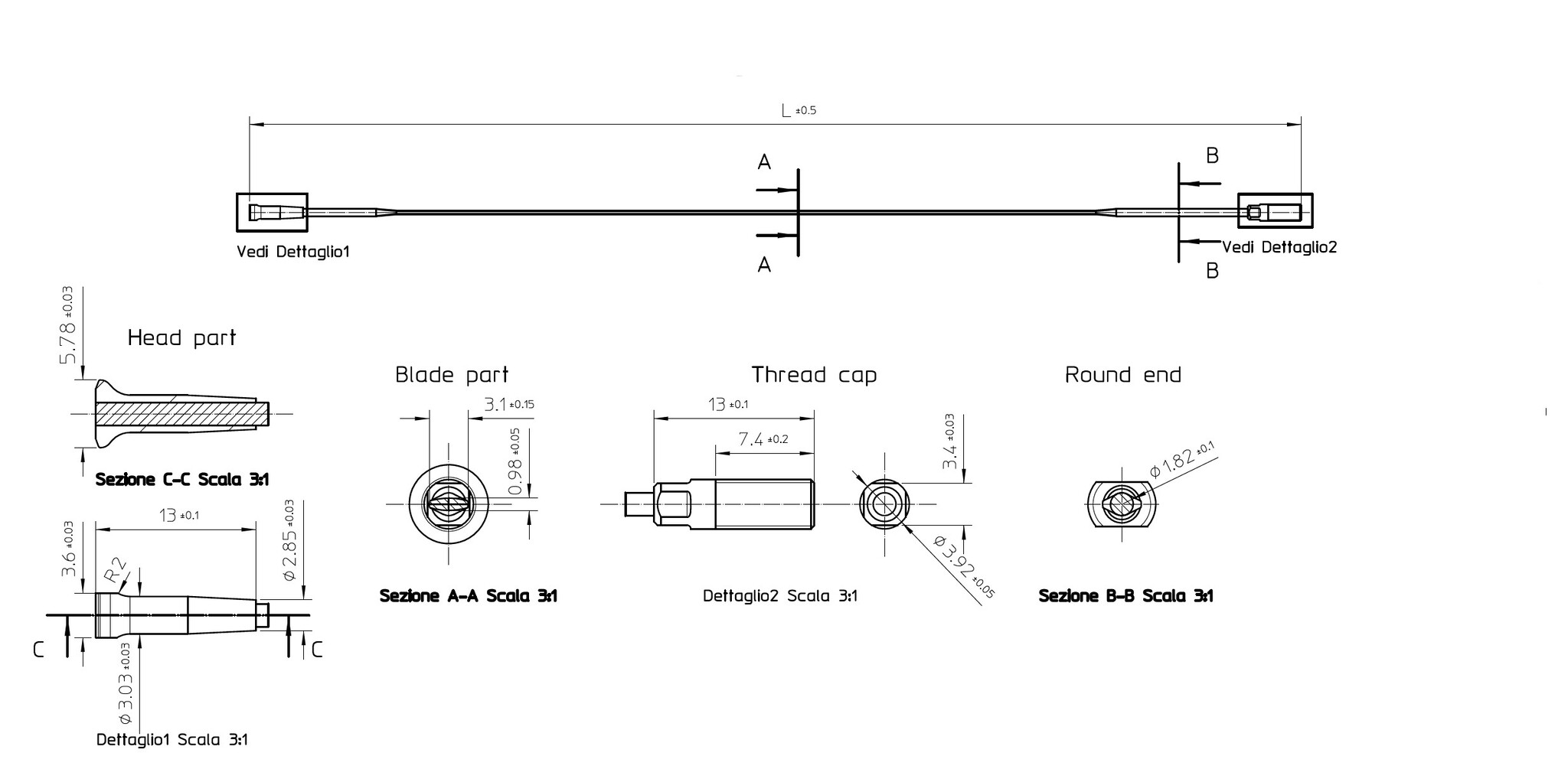
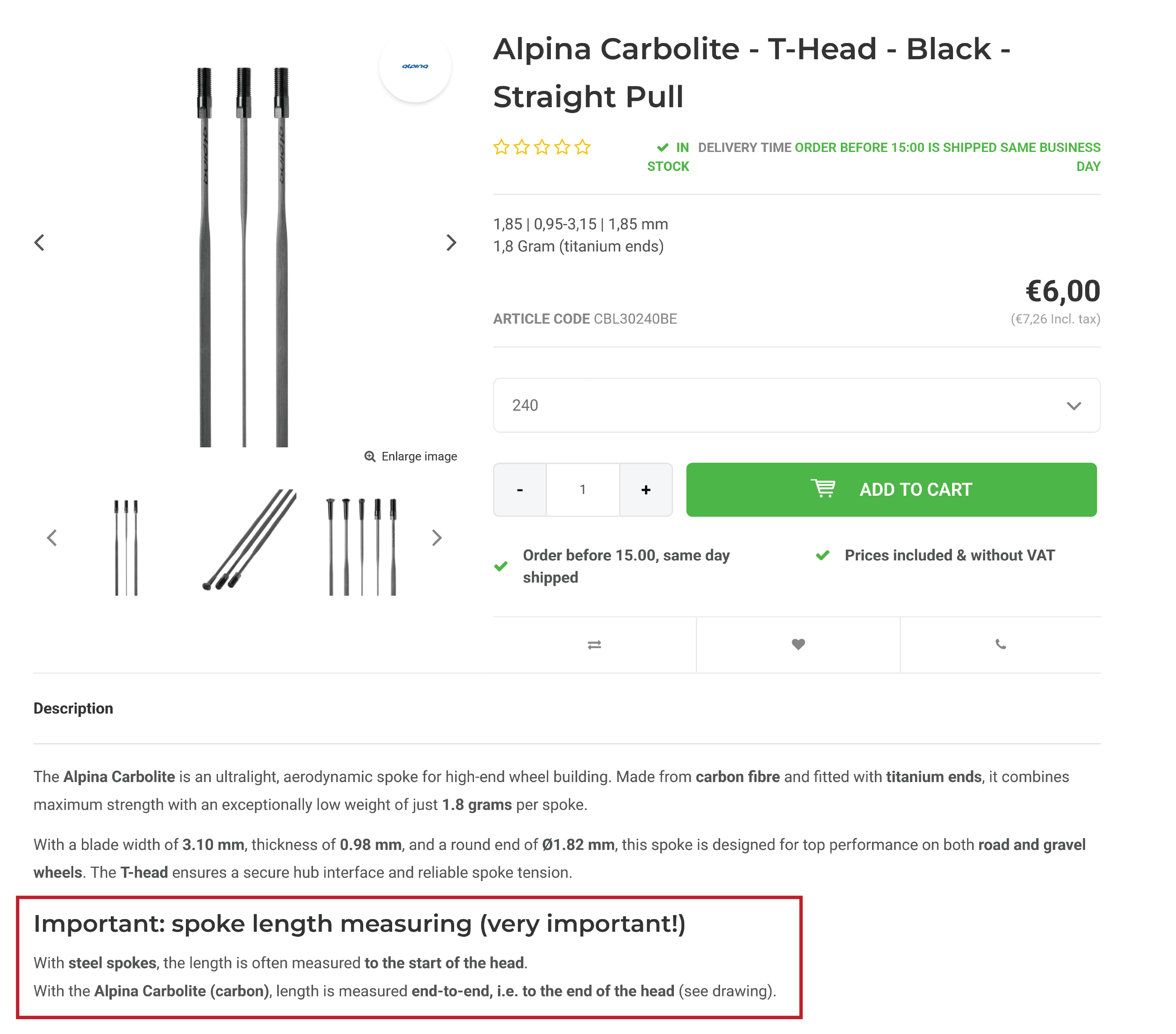
At this point, let's also look at the technical data of the Alpina Carbolite spoke. It looks like a rather conventional T-head, latest-generation carbon spoke, with all diameters closely following those of its competitors. Compared to most carbon spokes, two details, however, grab the eye. First, it is measured end-to-end, meaning that its specified length does not directly correspond to the ‘spoke offsets’ definition established above. Second, it uses a comparatively shorter spoke thread insert and spoke nipple combination.
Both spoke-related considerations, as a consequence, affect the spoke calculation.
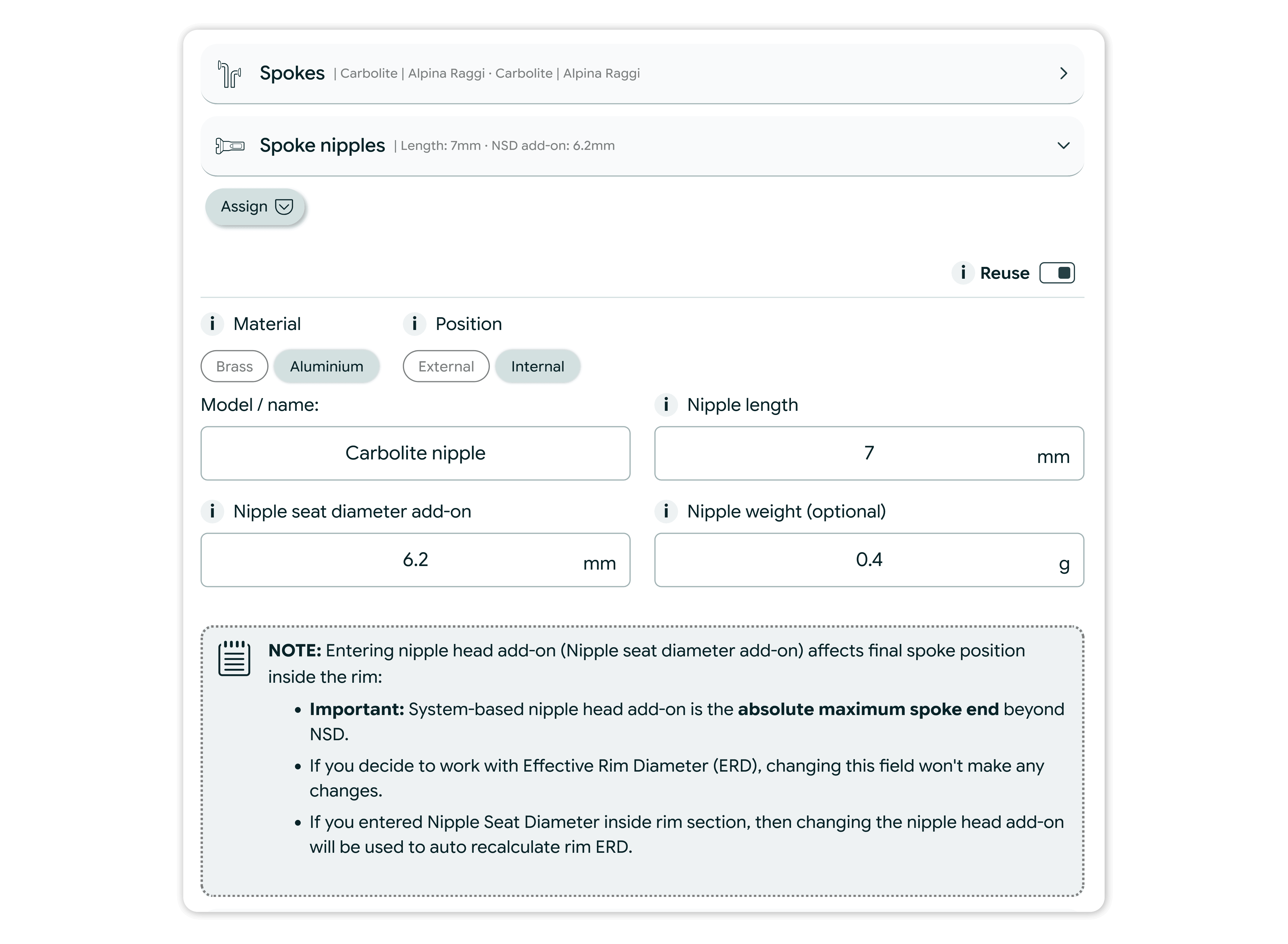
Using the rim's Nipple Seat Diameter allows a wheelbuilder to fine-tune the spoke end position inside the rim by entering a custom Nipple Seat Diameter add-on, as shown in the screenshot above. Starting with an NSD of 548 mm, adding 6.2 mm of desired spoke protrusion past the nipple seat bed brings us to 560.4 mm as the equivalent traditional ERD. The builder can confirm this by returning to the rim section, where the calculated rim dimension has been updated automatically.
Initial spoke lengths
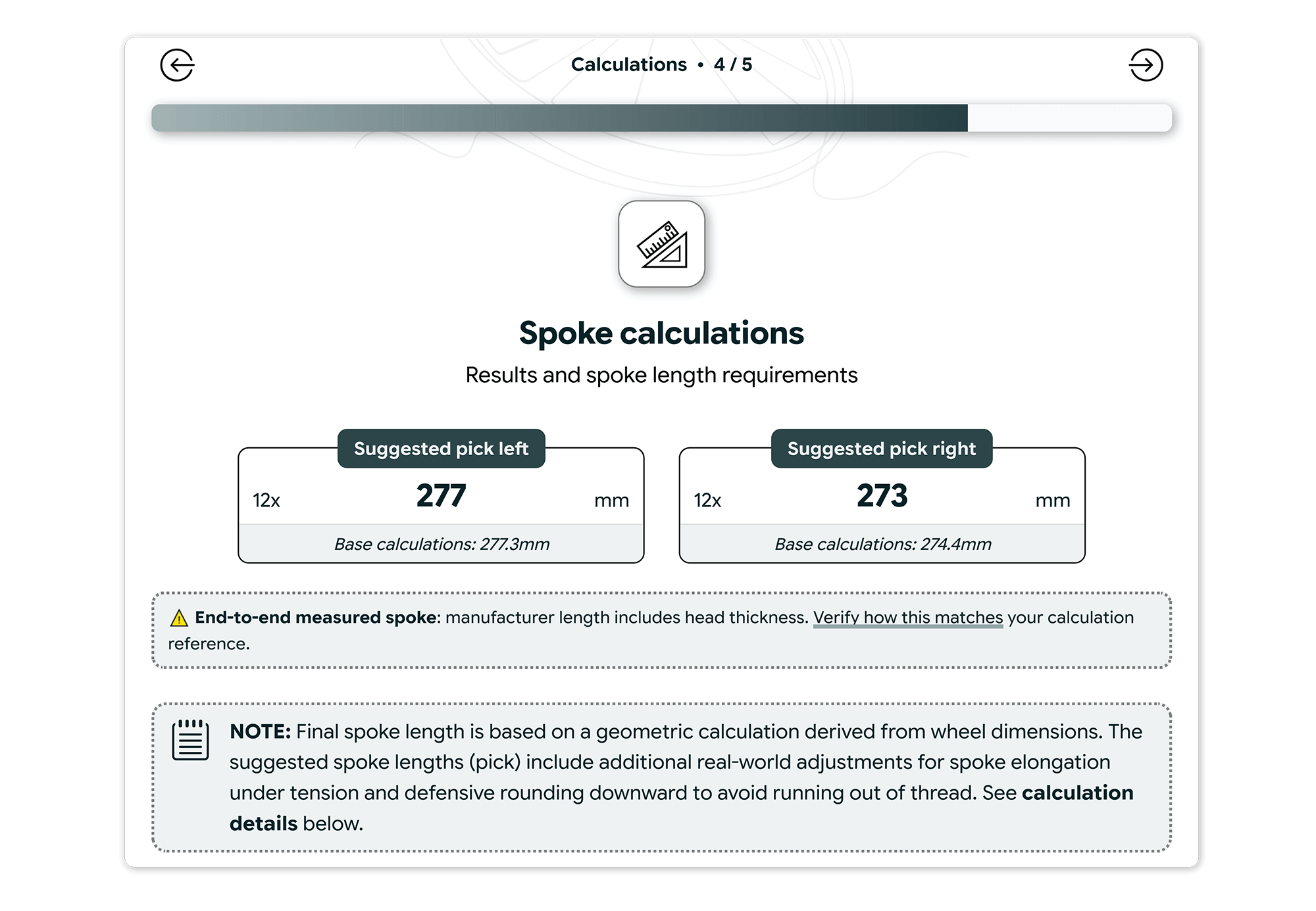
The screenshot below shows our initial calculation using the available rim dimensions, hub measurements sourced from the technical drawing, the default lacing pattern, and optimized thread engagement based on the spoke and nipple geometry. This would be the point where we'd normally finish the calculation for traditional stainless-steel, straight-pull type spokes, including most carbon spokes that use manufacturer's specified length definition as neck-to-end.
This is not the case in our spoke calculation. The notice container under the calculated results should, in that regards, grab our immediate attention.
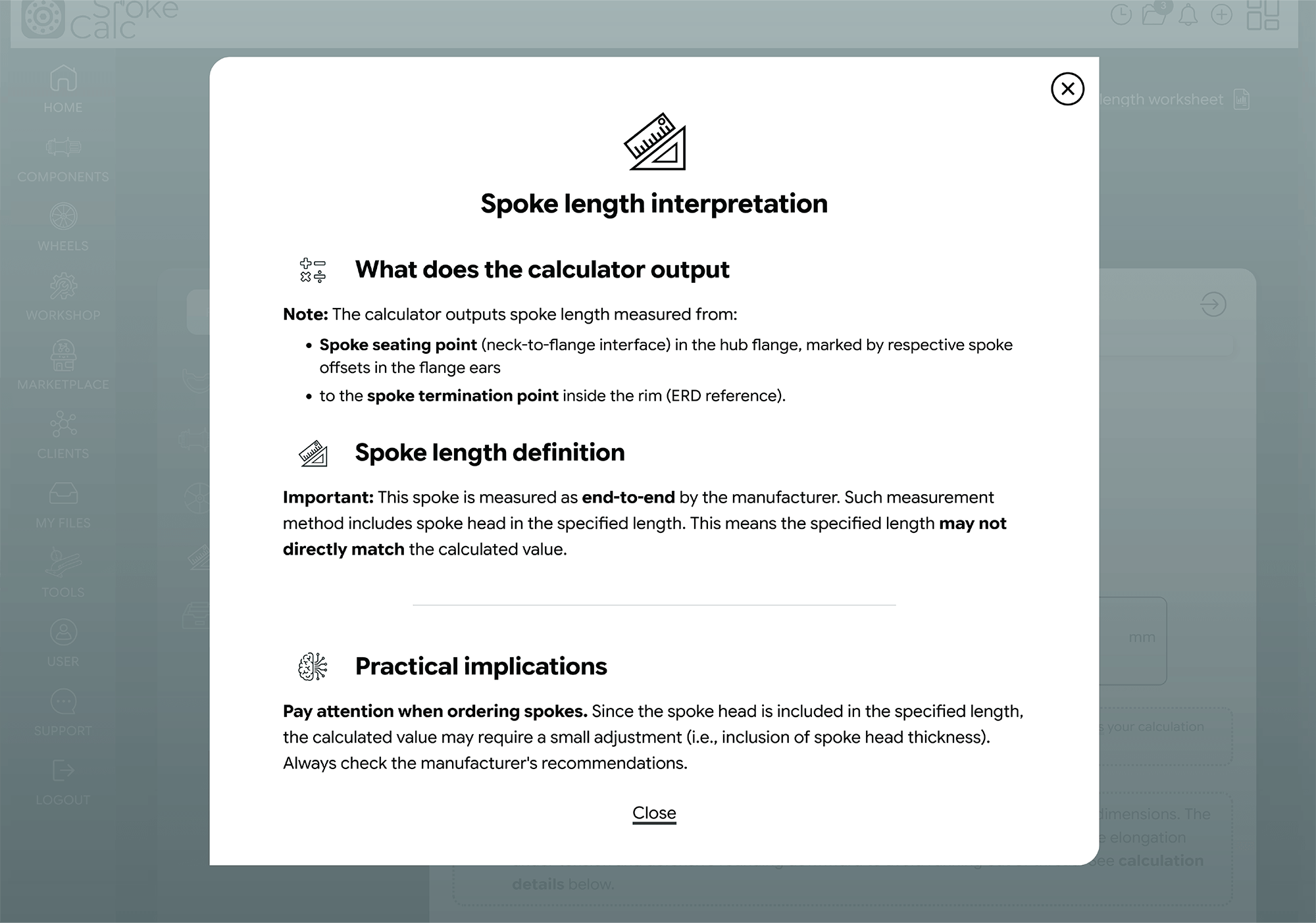
Clicking on the “Verify how this matches your calculation reference” text opens a pop-up window explaining how spoke length is defined in the calculator's output. The pop-up provides additional guidance to help users understand the reference point used, properly interpretate suggested picks and prevent mistakes.
Whereas the left-side result implies 277 mm as a potential ordering length, using this exact result to order Alpina Carbolite spokes would leave us with a spoke that is too short. Since Carbolite is measured end-to-end, a 277 mm spoke would effectively measure just under 275 mm between the neck and the end of the threads.
The difference lies in the spoke head thickness, which must be accounted for. Although this dimension is not stated in Alpina's technical specifications, my best measured estimate puts the head thickness at approximately 2.15 mm.
Knowing how manufacturer's spoke length definition might affect results, we should return and revise our calculations.
Accounting for spoke head thickness
At this point, there are two ways to account for the additional head thickness required by the end-to-end measurement convention. Pick the one that suits you the best.
The first, and simplest, is to add the head thickness to the final calculated spoke length. In our example, this means adding approximately 2.15 mm to the calculated result. Good solution on the go, but for a permanent file saving, the alternative fix, suggested below, is more appropriate.
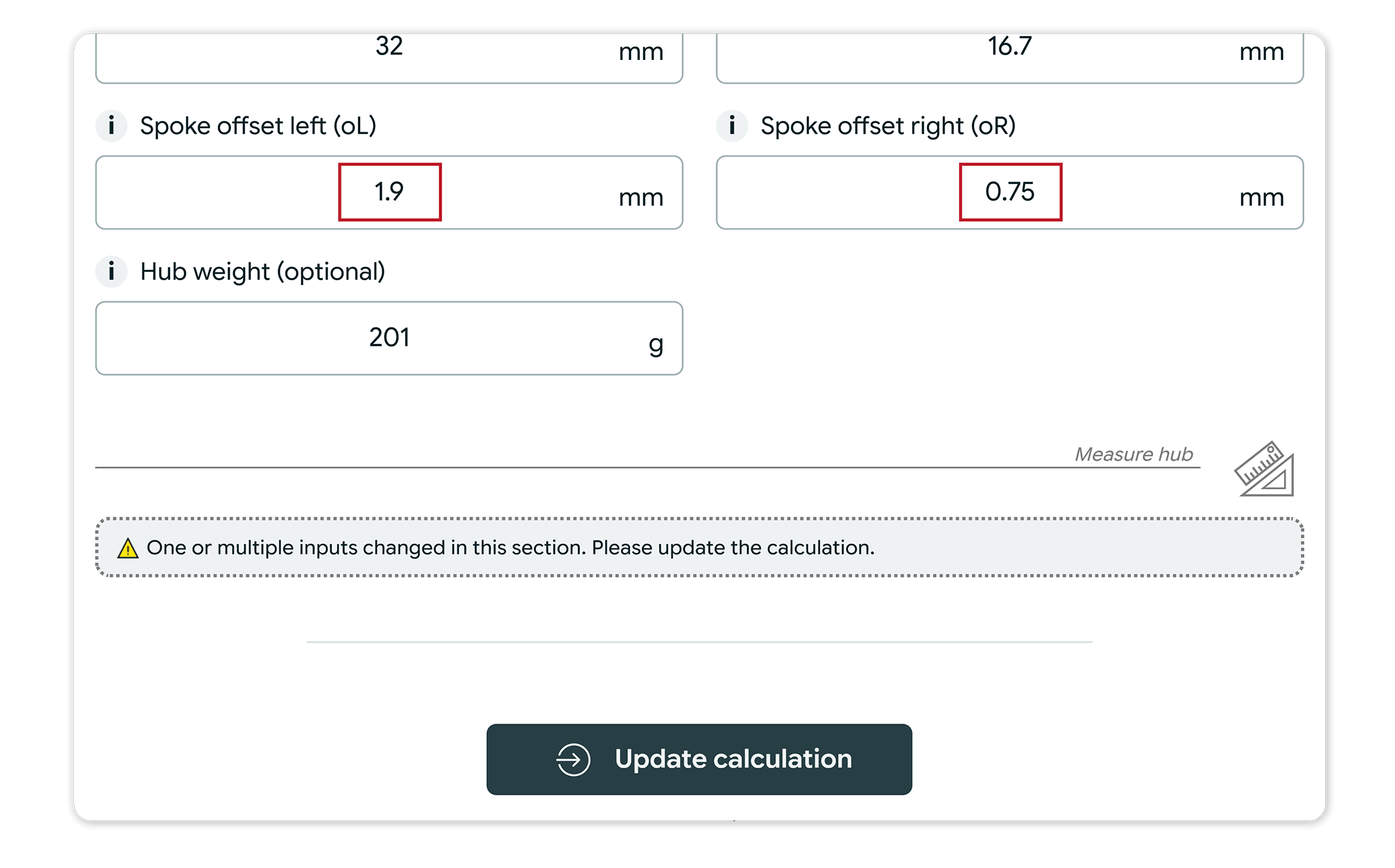
The second option is to incorporate the head thickness into the spoke offset. This approach is particularly useful when the lacing pattern is not radial, as the offset can then account for the actual position of the spoke head relative to the hub center.
Author's note: You might wonder why SpokeCalc doesn't automatically adjust calculated lengths for end-to-end spoke measurements. The reason is simple.
Altering the established length convention for straight-pull spokes, which uses the neck as its reference point, could cause confusion with existing straight-pull setups. Moreover, since head thickness can vary between different carbon spoke systems, supporting an end-to-end measurement convention would inevitably require the user to enter the head thickness as an additional parameter in the calculation.
Instead, SpokeCalc currently displays additional notices in the final results when a different measurement convention applies. This keeps the familiar calculation process intact while still making users aware of the manufacturer's specific requirements.
Make it simple using spokecalc.io
If you don't have access to the spoke calculator inside the app, you are probably wondering whether you can achieve the same result using a simple, free calculator like spokecalc.io.
Absolutely. The important part is understanding what you need to give the calculator. SpokeCalc.io calculates spoke length to the final termination point of the spoke, traditionally represented by the Effective Rim Diameter (ERD). For carbon spokes, you therefore first need to derive this effective rim dimension from the rim's Nipple Seat Diameter, taking into account the actual spoke thread and nipple combination you are using.
As discussed earlier, the relationship is:
ERD = NSD + 2 × NSD add-on
where the NSD add-on represents the distance the spoke extends into the rim beyond the nipple seat.
As for accounting for spoke head thickness, the same two approaches can be applied when using the free spokecalc.io calculator. Either add the head thickness to the final result, or incorporate it into the spoke offset when appropriate.
Enjoyed this article?
Buy me a coffee to support my work!
Every coffee helps fuel more content like this!
FINAL THOUGHTS
In essence, carbon-spoke wheels using the latest-generation carbon spokes are not fundamentally different from traditional straight-pull configurations with internal spoke nipples. The basic geometry and calculation principles remain the same.
This practical example intentionally focused on an exception rather than the rule. By understanding the dimensions, reference points, and steps required for a more demanding calculation, wheel builders are now able to reuse concepts and apply them to much simpler carbon spoke setups.
Carbon spokes do require a little more attention to certain details, particularly when it comes to measurement conventions and manufacturer-specific requirements. Once these are understood, however, the calculation itself becomes much less intimidating.
Hopefully, this practical guide gives you a better understanding of what to look for when calculating carbon spoke lengths and boost your confidence to approach the next build with a little more certainty.
Enjoy wheel building.
About author

Aljaž Trenta
Author and founder"As a cycling enthusiast, bike mechanic and self-taught web designer, combining several of my passions and skills to build SpokeCalc was a great fun for me."